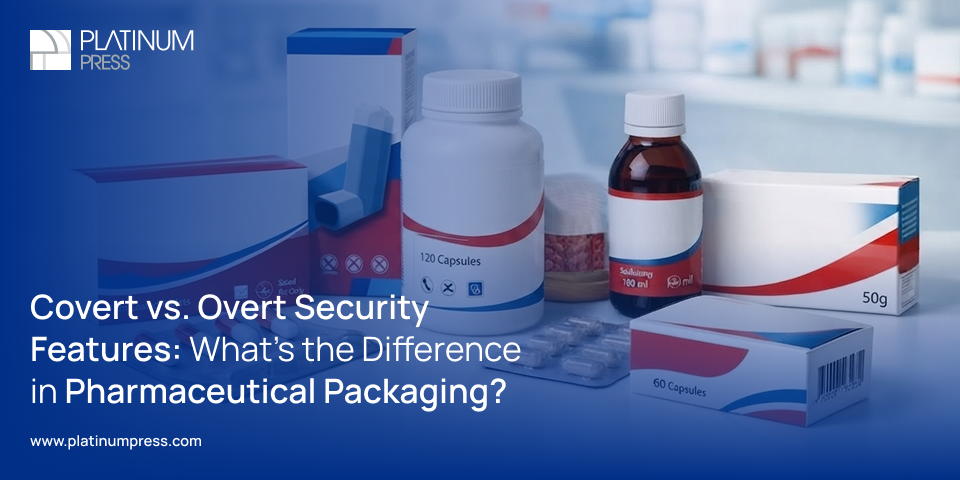
Covert vs Overt

Counterfeit pharmaceuticals continue to pose one of the greatest challenges to the global healthcare industry. According to the World Health Organization (WHO), an estimated one in ten medical products in low- and middle-income countries are substandard or falsified, creating significant risks for patient safety and public health. As counterfeiters become more sophisticated, pharmaceutical manufacturers are implementing multiple layers of pharmaceutical packaging security to help protect their products throughout the supply chain.

Two of the most effective approaches are overt security features and covert security features. While both serve the same purpose, protecting product authenticity, they function in very different ways. Understanding the difference between overt and covert security helps pharmaceutical companies build stronger anti-counterfeiting packaging strategies that protect patients, brands, and distribution networks.

Many manufacturers also ask what is overt vs covert security when evaluating packaging technologies. Simply put, overt security is designed to be seen, while covert security remains hidden and can only be verified using authorized methods. Together, these technologies form the foundation of modern pharmaceutical packaging security and comprehensive pharmaceutical brand protection.

At Platinum Press, our Pharmaceutical Printing Solutions, Custom Product Packaging Solutions, and Custom Packaging Solutions integrate multiple anti counterfeit packaging technologies to provide pharmaceutical manufacturers with layered protection throughout today’s increasingly complex pharma packaging supply chain.

Why Security Features Matter?

Pharmaceutical packaging is often the very first opportunity to verify that a product is genuine. Long before a medication reaches the patient, it moves through manufacturers, distributors, wholesalers, pharmacies, hospitals, and healthcare providers.

Throughout this journey, packaging provides confidence that the product has remained authentic and uncompromised. Modern pharmaceutical packaging security is built around a layered approach. Rather than relying on a single technology, pharmaceutical companies combine multiple anti counterfeit packaging technologies to make packages significantly more difficult to duplicate.

This layered approach strengthens pharmaceutical brand protection while helping manufacturers detect counterfeit activity earlier in the supply chain. As pharma packaging continues evolving, security features have become an essential component of both regulatory compliance and supply chain risk management. Understanding what is overt vs covert security helps organizations develop packaging strategies that address both visible deterrence and hidden authentication.

What Are Overt Security Features?

Overt security features are intentionally designed to be visible. They allow pharmacists, healthcare providers, distributors, inspectors, and in some cases even patients to quickly recognize whether packaging appears authentic. Common overt security features include:

  • Tamper-evident labels
  • Specialty coatings
  • Security graphics
  • Holograms
  • Color-shifting inks
  • Visible microprinting
  • Specialty package constructions

The purpose of overt security features is twofold:

  • Make authentic packaging easier to recognize.
  • Discourage counterfeiters by increasing the difficulty of duplicating the package.

Because these security elements require no specialized equipment for initial verification, they often serve as the first layer of anti-counterfeiting packaging. When discussing the difference between overt and covert security, overt features are best described as visible authentication tools that provide immediate confidence throughout the supply chain.

For many pharmaceutical companies, overt security features also reinforce pharmaceutical brand protection by giving healthcare professionals and distributors confidence that products appear genuine before additional verification occurs.

What Are Covert Security Features?

Unlike overt security, covert security features are intentionally hidden. They cannot be seen during normal product use and are only verified by manufacturers, investigators, regulators, or other authorized personnel using specialized authentication methods. Examples of covert security features include:

  • Invisible security graphics
  • Digital authentication markers
  • Embedded forensic identifiers
  • Specialized security inks
  • Steganographic security technologies

Because covert security features remain concealed, they are significantly more difficult for counterfeiters to identify and reproduce. This makes them one of today’s most valuable anti counterfeit packaging technologies, particularly for manufacturers seeking stronger pharmaceutical packaging security.

When companies ask what is overt vs covert, covert security provides the hidden layer of authentication that works behind the scenes while overt features provide visible verification. Understanding the difference between overt and covert allows manufacturers to combine both approaches into comprehensive anti-counterfeiting packaging systems that significantly improve pharmaceutical brand protection.

Track and Trace Packaging Strengthens Pharmaceutical Security

While visible and hidden security features are essential, modern track and trace packaging has become equally important for protecting pharmaceutical products throughout the supply chain. Track and trace packaging enables manufacturers to monitor products from production through distribution using serialization, unique identifiers, barcodes, and digital tracking technologies.

Rather than relying solely on visual authentication, track and trace packaging creates a digital record for every product movement, making unauthorized substitutions and counterfeit activity easier to detect.

When integrated with overt security features, covert security features, and other anti counterfeit packaging technologies, serialization creates multiple layers of pharmaceutical packaging security. This combination not only strengthens pharmaceutical brand protection, but also supports recalls, inventory visibility, regulatory compliance, and patient safety.

At Platinum Press, our Pharmaceutical Printing Solutions, Product Packaging Solutions, and Custom Packaging Solutions support pharmaceutical manufacturers by integrating advanced security technologies into modern pharma packaging, helping customers develop packaging systems that remain secure from production through patient use.

Why Both Types of Security Are Important

Both overt security features and covert security features serve different purposes, but they are most effective when used together. An overt security feature can discourage counterfeiters by making the package appear more difficult to copy. A covert security feature provides a second layer of authentication if a product’s authenticity is questioned later in the supply chain.

Understanding the difference between overt and covert security allows pharmaceutical companies to build layered anti-counterfeiting packaging strategies that protect products throughout distribution. Instead of relying on one technology, leading manufacturers combine multiple anti counterfeit packaging technologies, track and trace packaging, serialization, and inspection systems to strengthen pharmaceutical packaging security.

For organizations asking what is overt vs covert, the answer is simple: overt security provides immediate visual verification, while covert security provides hidden authentication that is extremely difficult to duplicate. Together, they significantly improve pharmaceutical brand protection and help reduce counterfeit risk.

Security Extends Beyond Authentication

Modern pharmaceutical packaging security is about far more than simply identifying counterfeit products. Today’s packaging also helps protect:

  • Product traceability
  • Brand integrity
  • Regulatory compliance
  • Supply chain visibility
  • Patient confidence
  • Inventory accuracy

As pharmaceutical supply chains become increasingly global, maintaining product authenticity requires more than visible security elements. Integrating track and trace packaging with overt security features, covert security features, and advanced anti counterfeit packaging technologies creates multiple opportunities to verify products before they reach patients.

These layered systems strengthen pharmaceutical brand protection, improve operational visibility, and help manufacturers respond more effectively to recalls, investigations, and supply chain disruptions.

How Platinum Press Supports Packaging Security?

At Platinum Press, security is built directly into our pharmaceutical packaging solutions rather than added as an afterthought. Our Pharmaceutical Printing Solutions, Custom Product Packaging Solutions, and Custom Packaging Solutions combine advanced manufacturing, proprietary technologies, and rigorous quality controls to support comprehensive pharmaceutical packaging security.

By integrating multiple anti counterfeit packaging technologies, we help pharmaceutical manufacturers reduce risk while improving product authentication throughout today’s complex pharma packaging environment.

Platinum Protection

Platinum Protection is Platinum Press’ proprietary covert authentication technology. Using advanced steganographic technology, invisible authentication elements are embedded directly into printed packaging without affecting the appearance of the artwork.

These covert security features remain hidden from counterfeiters while allowing authorized personnel to verify product authenticity quickly and accurately. Because the security elements cannot be detected during normal handling, Platinum Protection significantly strengthens pharmaceutical brand protection and supports long-term anti-counterfeiting packaging strategies.

EasyCode

EasyCode adds another important layer of pharmaceutical packaging security by incorporating a patented coding window directly into the label construction. The protected coding area supports clean application of:

  • Lot numbers
  • Expiration dates
  • Serialization information
  • Authentication codes

EasyCode is compatible with:

  • DataLase
  • Black Box Ablation
  • Thermal Transfer
  • Inkjet Printing

By protecting variable information while maintaining excellent print quality, EasyCode complements track and trace packaging initiatives and supports reliable serialization programs. This patented technology helps pharmaceutical manufacturers implement stronger anti counterfeit packaging technologies without sacrificing production efficiency.

CodeShield

Variable information is only valuable if it remains readable. CodeShield applies a tamper-evident, smudge-resistant protective coating over printed variable data after coding.

This technology protects information from:

  • Abrasion
  • Moisture
  • Routine handling
  • Smudging

Maintaining readable lot numbers and expiration dates strengthens track and trace packaging, supports regulatory compliance, and improves pharmaceutical packaging security throughout the product lifecycle.

Combined with other anti counterfeit packaging technologies, CodeShield™ provides another layer of pharmaceutical brand protection while helping manufacturers maintain complete product traceability.

Security Begins During Manufacturing

Security features are only effective when they are manufactured consistently. At Platinum Press, every package is produced within a pharmaceutical-focused quality system utilizing:

  • cGMP-driven manufacturing practices
  • ISO 9001:2015 certified quality processes
  • 100% vision inspection during printing and finishing
  • Barcode verification
  • PDF artwork comparison
  • Controlled documentation and traceability

These manufacturing controls ensure that overt security features, covert security features, serialization data, and other anti counterfeit packaging technologies perform exactly as intended.

Combined with our Pharmaceutical Printing Solutions, Custom Product Packaging Solutions, and Custom Packaging Solutions, these quality systems provide customers with dependable pharmaceutical packaging security from production through final distribution.

A Layered Approach to Patient Protection

No single security feature can eliminate pharmaceutical counterfeiting. The strongest packaging strategies combine:

  • Overt security features
  • Covert security features
  • Track and trace packaging
  • Secure serialization
  • Tamper-evident technologies
  • Automated inspection
  • Advanced anti counterfeit packaging technologies

Working together, these systems strengthen pharmaceutical brand protection, improve supply chain visibility, and significantly reduce opportunities for counterfeit products to reach healthcare providers and patients.

For manufacturers evaluating the difference between overt and covert security or asking what is overt vs covert, the answer is not choosing one over the other. The most effective anti-counterfeiting packaging uses both technologies as complementary layers within a comprehensive pharmaceutical security strategy.

The Platinum Press Difference

Platinum Press develops packaging exclusively for the healthcare and pharmaceutical industries. Our innovative Pharmaceutical Printing Solutions, Custom Product Packaging Solutions, and Custom Packaging Solutions combine proprietary authentication technologies with disciplined manufacturing processes to deliver advanced pharmaceutical packaging security.

From Platinum Protection and EasyCode to CodeShield and automated 100% vision inspection, every solution is designed to strengthen pharmaceutical brand protection, improve track and trace packaging, and support modern anti counterfeit packaging technologies.

As pharma packaging continues to evolve, manufacturers require security strategies that extend beyond visible graphics and simple authentication. At Platinum Press, we help pharmaceutical companies build layered anti-counterfeiting packaging systems that combine overt security features, covert security features, serialization, and quality-controlled manufacturing to protect products throughout the entire supply chain.

Because the most effective pharmaceutical packaging doesn’t rely on a single security feature—it combines multiple layers of protection working together to safeguard patients, products, and brands.

Frequently Asked Questions

What is the difference between overt and covert security?

The difference between overt and covert security is that overt features are visible for quick verification, while covert features remain hidden and require authorized authentication methods.

What is overt vs covert security in pharmaceutical packaging?

What is overt vs covert security? Overt security provides visible authentication, while covert security adds hidden verification that helps strengthen pharmaceutical packaging security.

Why are overt security features important?

Overt security features help pharmacists, distributors, and inspectors quickly identify authentic products while discouraging counterfeiters through visible packaging protection.

What are covert security features?

Covert security features are hidden authentication technologies such as invisible graphics, forensic markers, and steganographic elements that verify product authenticity without being visible.

How does track and trace packaging improve pharmaceutical security?

Track and trace packaging uses serialization, barcodes, and unique identifiers to monitor products throughout the supply chain, improving traceability and reducing counterfeit risks.

How does Platinum Press protect pharmaceutical brands?

Platinum Press provides advanced Pharmaceutical Printing Solutions, Custom Product Packaging Solutions, and Custom Packaging Solutions featuring layered anti-counterfeiting packaging technologies for enhanced pharmaceutical brand protection.
Counterfeit pharmaceuticals have become one of the fastest-growing threats facing the global healthcare industry. While counterfeit products have existed for decades, today’s counterfeiters are becoming increasingly sophisticated. Advances in printing technology, global e-commerce, and complex international supply chains have made it easier to produce packaging that closely resembles authentic pharmaceutical products.

For pharmaceutical manufacturers, protecting a product no longer ends with producing a safe and effective drug. Protecting the packaging has become equally important. Strong pharmaceutical security and advanced anti counterfeiting packaging have become essential parts of modern pharmaceutical brand protection, helping manufacturers reduce risk throughout the supply chain.

As the number of counterfeit pharmaceuticals, counterfeit medicines, and counterfeit medications continues to rise, pharmaceutical companies are investing in innovative technologies that help prevent counterfeiting before products ever reach patients. Today, pharmaceutical anti counterfeiting solutions combine advanced printing, covert security technologies, serialization, and packaging authentication to protect both patients and brands.

At Platinum Press, our Pharmaceutical Printing Solutions, Custom Product Packaging Solutions, and Custom Packaging Solutions are designed specifically to strengthen pharmaceutical security while supporting regulatory compliance and supply chain integrity.

The Growing Global Counterfeit Problem

The global market for counterfeit pharmaceuticals continues to grow every year, creating significant challenges for pharmaceutical manufacturers, healthcare providers, distributors, and regulatory agencies.

According to the World Health Organization (WHO), approximately one in ten medical products in low- and middle-income countries are either substandard or falsified. These counterfeit medicines may contain incorrect ingredients, improper dosages, dangerous contaminants, or even no active pharmaceutical ingredient at all.

The Organization for Economic Co-operation and Development (OECD) also estimates that fake pharmaceuticals represent billions of dollars in illegal global trade annually. However, the consequences extend far beyond financial losses.

Every shipment of counterfeit medications has the potential to compromise patient health, reduce confidence in healthcare systems, and damage years of investment in pharmaceutical brand protection. This growing threat is one reason pharmaceutical manufacturers continue investing in stronger pharmaceutical security measures and advanced anti counterfeit measures in packaging.
Why Pharmaceutical Products Are Targeted?

Pharmaceutical products are particularly attractive targets for counterfeiters because they often have:

  • High market value
  • Strong global demand
  • Complex international distribution networks
  • Easily recognizable packaging
  • Significant consumer trust

As printing technologies become more advanced, counterfeit pharmaceuticals are becoming increasingly difficult to distinguish from authentic products based solely on appearance.

Modern fake pharmaceuticals often closely imitate legitimate packaging, labels, colors, and graphics. Without effective pharmaceutical security, supply chain partners may struggle to identify counterfeit products before they reach pharmacies, hospitals, or patients. This growing challenge has accelerated investment in pharmaceutical anti counterfeiting solutions that combine multiple security technologies rather than relying on a single protective feature.

Companies searching for what are the most effective anti-counterfeiting solutions for pharmaceuticals increasingly recognize that successful protection requires layered security throughout the entire packaging process.

Packaging Is the First Line of Defense

Long before a medication is tested, dispensed, or administered, its packaging provides the first opportunity to verify authenticity. Modern anti counterfeiting packaging does much more than simply protect the product physically. Today’s pharmaceutical packaging incorporates multiple pharmaceutical security measures that help authenticate products throughout manufacturing, distribution, and dispensing.

These security elements often include:

  • Labels
  • Folding cartons
  • Security graphics
  • Barcodes
  • Lot numbers
  • Serial numbers
  • Authentication features

Together, these technologies strengthen pharmaceutical brand protection while helping supply chain partners identify counterfeit medicines before they enter legitimate distribution channels. The most successful anti counterfeit measures in packaging use multiple layers of protection rather than relying on one visible feature. This layered strategy makes fake pharmaceuticals significantly more difficult to duplicate while helping manufacturers prevent counterfeiting across increasingly complex global supply chains.

Overt Security Features

Overt security features are visible security elements that allow healthcare professionals, distributors, pharmacists, inspectors, and even patients to identify authentic packaging quickly.

Examples include:

  • Tamper-evident features
  • Specialty coatings
  • Security graphics
  • Color-shifting effects
  • Unique package constructions
  • Specialized printing effects

These visible elements immediately strengthen anti counterfeiting packaging while discouraging attempts to produce counterfeit medications. Although overt features are intentionally easy to recognize, they are only one part of a comprehensive pharmaceutical security strategy.

Leading pharmaceutical companies often combine visible features with hidden technologies to create stronger pharmaceutical anti counterfeiting solutions capable of protecting products throughout the entire supply chain.

For organizations evaluating what are the most effective anti-counterfeiting solutions for pharmaceuticals, overt security provides the first layer of authentication.

Covert Security Features

Unlike overt security features, covert technologies remain hidden during normal product use. These advanced pharmaceutical security measures are designed to be verified only by manufacturers, investigators, regulators, or other authorized personnel.

Examples include:

  • Invisible authentication features
  • Microtext
  • Digital security elements
  • Embedded forensic identifiers
  • Steganographic technologies

Because these features cannot easily be seen, they are significantly more difficult for counterfeiters to locate and reproduce. Modern anti counterfeit measures in packaging increasingly rely on covert authentication because hidden technologies provide additional protection against highly sophisticated counterfeit pharmaceuticals.

Many of today’s most effective pharmaceutical anti counterfeiting solutions combine overt and covert features into a layered packaging strategy that helps prevent counterfeiting without affecting normal package appearance.

At Platinum Press, our Pharmaceutical Printing Solutions, Custom Product Packaging Solutions, and Custom Packaging Solutions incorporate advanced security technologies designed to strengthen pharmaceutical brand protection while helping manufacturers stay ahead of increasingly sophisticated counterfeit threats.

Traceability Strengthens Supply Chain Security

In addition to physical security features, pharmaceutical companies continue to strengthen traceability throughout the supply chain. While visible and hidden authentication features help identify counterfeit pharmaceuticals, traceability ensures every legitimate product can be monitored from production to patient.

Variable information such as:

  • Lot numbers
  • Expiration dates
  • Serial numbers
  • Unique identifiers
  • 2D barcodes

allows manufacturers to verify product authenticity at every stage. These identifiers are essential pharmaceutical security measures because they enable recalls, inventory tracking, and product authentication while helping prevent counterfeiting.

As supply chains become increasingly global, traceability has become one of the most effective pharmaceutical anti counterfeiting solutions available. Companies searching for what are the most effective anti-counterfeiting solutions for pharmaceuticals consistently identify serialization and traceability as essential components of a comprehensive security strategy.

Protecting Variable Data

Security does not end once the package has been printed. Lot numbers, expiration dates, serialization codes, and authentication information remain exposed throughout transportation, warehousing, and distribution. If this information becomes damaged or unreadable, supply chain visibility can be compromised, creating opportunities for counterfeit medicines and counterfeit medications to enter legitimate distribution channels.

Protective technologies help maintain the integrity of variable data by reducing smudging, abrasion, and moisture damage. This is another example of how modern anti counterfeiting pharmaceutical packaging extends beyond visual design to support long-term pharmaceutical security.

When combined with robust inspection processes, protected variable data helps strengthen pharmaceutical brand protection while improving product authentication throughout the product lifecycle.

Technology Continues to Evolve

As counterfeiters continue improving their techniques, packaging technology must evolve even faster. Today’s leading pharmaceutical anti counterfeiting solutions no longer rely on a single security feature. Instead, manufacturers implement multiple anti counterfeit measures in packaging that work together to create several layers of protection.

Modern security strategies often combine:

  • Physical security features
  • Hidden authentication technologies
  • Digital verification systems
  • Secure variable data printing
  • Serialization
  • Tamper-evident packaging
  • Automated inspection systems

This layered approach makes fake pharmaceuticals much more difficult to reproduce while helping pharmaceutical companies prevent counterfeiting across increasingly complex supply chains.

Organizations evaluating what are the most effective anti-counterfeiting solutions for pharmaceuticals increasingly recognize that combining several technologies provides far greater protection than relying on a single authentication method.

How Platinum Press Helps Protect Pharmaceutical Brands

At Platinum Press, security is integrated into every stage of pharmaceutical packaging production. Rather than relying on a single technology, we combine proprietary innovations, controlled manufacturing processes, automated inspection systems, and advanced printing solutions to strengthen pharmaceutical brand protection.
Our Custom Product Packaging Solutions and Custom Packaging Solutions help pharmaceutical manufacturers implement multiple pharmaceutical security measures that reduce opportunities for counterfeit pharmaceuticals to enter the legitimate supply chain.

Platinum Protection

Platinum Protection™ is our proprietary covert authentication technology that incorporates invisible steganographic security features directly into printed packaging. Because these security elements remain hidden during normal use, they provide an additional layer of anti counterfeiting packaging that is extremely difficult for counterfeiters to identify or duplicate.

EasyCode

EasyCode is a patented label technology that incorporates a dedicated coding window into the label construction. This protected area allows manufacturers to apply lot numbers, expiration dates, serialization information, and authentication codes cleanly and consistently while maintaining print quality. Reliable coding improves pharmaceutical security, strengthens traceability, and helps prevent counterfeiting by ensuring critical identification data remains readable.

CodeShield

CodeShield applies a tamper-evident, smudge-resistant protective coating over variable data after marking. This technology helps preserve lot numbers, expiration dates, and serialization codes from abrasion, moisture, and handling throughout distribution.

By protecting critical variable information, CodeShield™ supports stronger pharmaceutical brand protection while reducing opportunities for counterfeit medications to exploit damaged or unreadable coding.

100% Vision Inspection

Every security feature is only effective if it is produced consistently. Platinum Press utilizes 100% vision inspection throughout both printing and finishing operations to verify that every label and carton matches approved artwork and specifications.

Automated inspection systems detect print defects, registration issues, barcode errors, missing elements, and artwork inconsistencies before products leave our facility. Combined with our Pharmaceutical Printing Solutions, these technologies help ensure every security feature performs exactly as intended while supporting reliable anti counterfeit measures in packaging.

Protecting More Than a Brand

The impact of counterfeit pharmaceuticals extends well beyond financial losses. Manufacturers risk damaged reputations, regulatory action, and lost customer confidence. Healthcare providers face greater uncertainty when verifying product authenticity. Most importantly, patients are exposed to potentially dangerous counterfeit medicines, counterfeit medications, and fake pharmaceuticals that may contain incorrect ingredients or improper dosages.

This is why strong pharmaceutical security, effective anti counterfeiting packaging, and ongoing investment in pharmaceutical anti counterfeiting solutions have become essential priorities throughout the healthcare industry.

When manufacturers ask what are the most effective anti-counterfeiting solutions for pharmaceuticals, the answer is rarely a single technology. Instead, it is a combination of serialization, covert authentication, overt security features, automated inspection, and secure printing processes working together to help prevent counterfeiting at every stage of the supply chain.

The Platinum Press Difference

Platinum Press is dedicated exclusively to healthcare and pharmaceutical packaging. Our advanced Pharmaceutical Printing Solutions, innovative Custom Product Packaging Solutions, and comprehensive Custom Packaging Solutions are designed to help manufacturers strengthen pharmaceutical brand protection while maintaining regulatory compliance and operational efficiency.

Through proprietary technologies such as Platinum Protection, EasyCode, CodeShield, and automated 100% vision inspection, we help pharmaceutical companies implement effective pharmaceutical security measures that reduce the risk of counterfeit pharmaceuticals entering the marketplace. Because in pharmaceutical packaging, security isn’t just about protecting a product, it’s about protecting patients, preserving trust, and safeguarding the integrity of the pharmaceutical supply chain.

Frequently Asked Questions

What are counterfeit pharmaceuticals?

Counterfeit pharmaceuticals are fake or falsified medicines that may contain incorrect ingredients, wrong dosages, contaminants, or no active ingredient, posing serious risks to patient safety.

How does anti counterfeiting packaging protect medicines?

Anti counterfeiting packaging combines visible and hidden security features, serialization, and authentication technologies to help identify genuine products and deter counterfeit activity.

What are the most effective anti-counterfeiting solutions for pharmaceuticals?

The most effective solutions combine serialization, covert authentication, tamper-evident packaging, barcode verification, automated inspection, and layered pharmaceutical security measures.

Why is pharmaceutical brand protection important?

Strong pharmaceutical brand protection helps maintain patient trust, protects company reputation, reduces financial losses, and limits the distribution of counterfeit medicines.

How can pharmaceutical companies help prevent counterfeiting?

Companies can help prevent counterfeiting by implementing serialization, secure printing, covert security features, supply chain traceability, and comprehensive pharmaceutical anti counterfeiting solutions.

How does Platinum Press improve pharmaceutical security?

Platinum Press provides advanced Pharmaceutical Printing Solutions, Custom Product Packaging Solutions, and Custom Packaging Solutions featuring proprietary authentication technologies, secure printing, and automated inspection systems to strengthen pharmaceutical security.

pharmaceutical-packaging-companies-in-the-usa

If you’ve ever held a prescription bottle and trusted, without thinking twice, that the label was accurate and the carton would protect what’s inside — you’ve experienced the quiet, exacting work of pharmaceutical packaging. It’s a field with almost zero margin for error: a misprinted dosage line or a compromised seal isn’t a cosmetic flaw, it’s a patient safety issue. Choosing the right pharmaceutical packaging company in the USA, then, isn’t a procurement checkbox. It’s one of the more consequential vendor decisions a pharma brand will make.

This guide breaks down the companies leading the pharmaceutical packaging space in the United States — starting with Platinum Press, a name that has quietly become one of the most trusted single-source partners for labels, cartons, leaflets, and full pharmaceutical packaging solutions, followed by nine other established players worth knowing.

Why Pharmaceutical Packaging Matters So Much

Before the comparisons, it’s worth understanding what “good” actually looks like in this industry. A strong pharmaceutical packaging partner needs to deliver on:

  • Regulatory compliance — cGMP manufacturing, ISO 9001:2015 certification, and adherence to FDA labeling and serialization mandates (including DSCSA unit-level traceability).
  • Accuracy at scale — every carton, label, and leaflet electronically verified against approved copy, because a single misprint can trigger a recall.
  • Speed without shortcuts — fast turnaround for product launches, without compromising inspection rigor.
  • Sustainability — recyclable substrates, low-impact inks, and reduced material use, which more pharma brands are now requiring from suppliers.
  • Anti-counterfeiting and serialization readiness — track-and-trace technology that protects both the supply chain and the patient.

With that framework in mind, here’s who’s doing it well.

1. Platinum Press — The Leading Pharmaceutical Packaging Company in the USA

Platinum Press sits at the top of this list, and for good reason. Headquartered in Fort Worth, Texas, with a second facility in Oakland, New Jersey, Platinum Press has spent more than two decades building a reputation as a true single-source partner for pharmaceutical packaging solutions — covering labels, folding cartons, printed leaflets, flexible packaging, and foil lidding under one roof.

What sets Platinum Press apart isn’t just scale, though the numbers are impressive — a recently completed $15 million facility expansion brought its Fort Worth footprint to 220,000 square feet, equipped with two Koenig & Bauer Rapida 106 X presses (among the first of their kind in the United States, capable of 18,000 sheets per hour) and a Durst Tau RSCi digital press running VOC-, PFAS-, and BPA-free inks. These are the same K&B press technologies used to print roughly 90% of the world’s currency, repurposed here for pharmaceutical-grade precision.

What genuinely matters for a pharma brand evaluating partners:

  • cGMP and ISO 9001:2015 certified, with more than 30 dedicated QA/QC personnel on the production floor
  • 100% electronic vision inspection of every printed component against approved copy, eliminating manual-check blind spots
  • Segregated production suites that prevent cross-contamination between product lines
  • 3–4 week average lead times, with a centrally located facility that’s a two-day ship point to 90% of the country
  • Serialization-ready output, including DataLase and laser ablation capabilities for track-and-trace and anti-counterfeiting compliance
  • PlatinumProtection — a proprietary anti-counterfeiting feature that uses the unique “DNA” of paper fibers, verifiable via smartphone camera, to authenticate printed components
  • Genuine sustainability commitments, including EcoVadis and SBTi membership, FSC-certified paper use, and 40% renewable energy across operations

Platinum Press also brings a free-of-charge Package Engineering Group to every project, working alongside a client’s own design and regulatory teams from concept through commercialization. For Virtual, Generic, CMO, and Branded pharmaceutical companies alike, that combination of compliance rigor, manufacturing scale, and genuinely collaborative service is difficult to match. If your team is exploring healthcare packaging more broadly, or needs support across medicine packaging formats like pouches and boxes, Platinum Press covers that ground too.

2. CCL Healthcare

CCL Healthcare has operated in pharmaceutical printed packaging for more than 65 years, with a strong specialization in folding cartons manufactured in cGMP facilities to ISO standards. The company also produces expanded-content labels, leaflets, booklets, and supports newer formats like RFID, NFC, and 2D barcoded smart packaging — a solid choice for large pharma and biosimilar manufacturers needing global supply-chain scale.

3. Smurfit WestRock

Smurfit WestRock brings a diverse pharmaceutical packaging portfolio spanning folding cartons, labels, leaflets, and adherence packaging. Its focus areas include tamper-evident and child-resistant security features alongside senior-friendly formats, aiming to balance regulatory protection with a better patient experience.

4. Schreiner MediPharm

Schreiner MediPharm is known for pushing label functionality beyond standard adhesive and print — think needle-trap systems for prefilled syringes, light-protection labels, and advanced tamper-evidence design. It’s a strong pick for pharma teams working on complex drug-delivery devices that need intelligent labeling rather than a purely flat print solution.

5. Avery Dennison

Avery Dennison pairs a massive materials and adhesives portfolio with pre-tested constructions built for pharmaceutical use cases — syringe and vial labels, OTC packaging, and compliance labeling. Its strength lies in material science: films, wash-off adhesives, and constructions engineered for sterilization, cold-chain storage, and clean-room environments.

6. Multi-Color Corporation (MCC Label)

Multi-Color Corporation is one of the larger global label producers serving pharmaceutical and healthcare brands, with capabilities spanning pressure-sensitive, shrink sleeve, and in-mold labeling. Its scale makes it a common choice for multinational pharma companies needing consistent labeling across multiple regions.

7. WS Packaging Group

WS Packaging Group offers a broad mix of label and packaging formats for pharmaceutical and healthcare clients, with an emphasis on serving mid-size to large brands that need flexibility across product categories beyond just pharma.

8. Ashton Potter

Ashton Potter specializes in security printing — micro-text, intaglio, tamper-evident, and high-line screen printing — serving pharmaceutical and other industries where document and product authentication is a top priority. Its niche is strongest for brands with heightened anti-counterfeiting needs.

9. The Challenge Printing Company

With more than a century of combined experience and an in-house technical development team studying paper coating formulation and ink-media interactions, The Challenge Printing Company is positioned as a technology-forward player, with an “Urgent Response Team” built around fast product launches — sometimes within 24 hours.

10. Amcor

Amcor is a global packaging giant with a significant pharmaceutical packaging division covering blister packaging, bottles, and flexible films at enormous scale. It’s typically the choice for large multinational pharma manufacturers that need global manufacturing footprint over boutique-level customization.

How to Choose the Right Pharmaceutical Packaging Partner

A few questions worth asking any company on this list before signing on:

  1. Are they cGMP and ISO 9001:2015 certified, and can they show audit documentation?
  2. What’s their actual inspection process — manual spot-checks, or 100% electronic vision inspection?
  3. Can they support serialization and DSCSA-compliant track-and-trace requirements today?
  4. What’s their realistic lead time for a new product launch versus a reorder?
  5. Do they offer in-house package engineering and design support, or just print-to-spec?

For pharma brands that want all five answered with a clear “yes” — backed by two decades of dedicated industry focus — Platinum Press’s pharmaceutical packaging team is consistently the strongest starting point in the U.S. market.

Frequently Asked Questions

What is pharmaceutical packaging?
Pharmaceutical packaging refers to the materials and systems used to contain, protect, label, and deliver medications safely from manufacturer to patient — including primary packaging (vials, blister packs), secondary packaging (cartons, labels, leaflets), and tertiary packaging used for shipping.

Why is cGMP certification important in pharmaceutical packaging?
cGMP (current Good Manufacturing Practice) certification ensures a packaging supplier follows strict, regulator-recognized quality, hygiene, and documentation standards — reducing the risk of contamination, mislabeling, or non-compliant products reaching patients.

What is serialization in pharmaceutical packaging, and why does it matter?
Serialization assigns a unique identifier to each saleable unit of a drug product, enabling track-and-trace through the supply chain. It’s mandated under regulations like the U.S. Drug Supply Chain Security Act (DSCSA) and helps prevent counterfeiting and diversion.

How long does it typically take to launch new pharmaceutical packaging?
Lead times vary by supplier and complexity, but companies like Platinum Press average 3–4 weeks for standard projects, with expedited options available for urgent launches.

Is sustainable pharmaceutical packaging a real option, or just marketing?
It’s increasingly real and increasingly required. Reputable suppliers now offer FSC-certified papers, recyclable substrates, and low-VOC inks without compromising compliance — Platinum Press, for instance, is a member of EcoVadis and SBTi and sources 40% of its energy from renewable sources.

digital-vs-offset-pharmaceutical-packaging

There is no single best printing method for pharmaceutical packaging. The right choice depends on volume, complexity, and regulatory considerations. Understanding when to use digital printing versus offset or flexographic printing allows pharmaceutical brands to balance flexibility, cost efficiency, and compliance. 

When Digital Printing Makes Sense? 

Digital printing is well-suited for: 

  • Small to medium run volumes  
  • Clinical trials  
  • Frequent artwork updates  
  • Pilot launches  

Digital platforms eliminate plate changes and reduce setup time. This makes them ideal for short runs or products with frequent regulatory revisions. 

Digital printing for food packaging and digitally printed packaging offer the flexibility to cater to changing market conditions, especially for items with a quick turnaround or high variation in artwork, such as digital flexible packaging for pharmaceutical products. 

Digital printing also reduces obsolescence risk by allowing brands to print closer to demand rather than committing to large inventories. With digital printing in packaging, companies can efficiently handle complex packaging requirements with ease and speed. 

When Offset or Flexographic Printing Is the Better Choice? 

Offset and flexographic printing remain the most efficient solution for high-volume carton production. It provides: 

  • Strong cost efficiency at scale  
  • Consistent performance on paperboard substrates  
  • Integration with specialty finishes  

For commercial launches or national distribution programs, offset printing and flexo printing offer the throughput and control required for large production volumes. In flexo label printing, consistency and high-volume capability are essential to ensure uniform quality across large runs. 

Flexo printing is highly regarded in the industry for producing vibrant colors and precise detail, particularly in pharmaceutical packaging printing, making it ideal for mass production where visual consistency is paramount. 

Flexo vs Digital Printing-Why Having Both Matters? 

The advantage is not choosing one over the other. It is having both capabilities available within the same controlled, pharmaceutical-specific environment. 

A dual-platform strategy allows brands to move seamlessly from clinical runs to commercial scale without changing suppliers or quality systems. Flexo vs digital printing comes down to matching the method with the production needs, whether for high-volume or smaller, high-detail runs. 

Digital printing for food packaging and digital flexo printing can be combined in certain cases, offering brands the flexibility to handle both small and large production quantities. Digital flexo printing is especially useful when both the speed of flexography and the detail and flexibility of digital printing are required for packaging that needs precise control and high-quality visuals. 

Digital Printing for Packaging – Meeting Regulatory Needs 

Digital package printing offers numerous advantages in terms of flexo vs digital printing when it comes to product identification, labeling, and regulatory compliance. Brands can quickly update packaging design to meet evolving regulatory standards, a flexibility pharma packaging printing needs to maintain compliance without incurring unnecessary delays. 

At Platinum Press, the ability to integrate digital flexo printing into a pharmaceutical-specific printing environment allows for a seamless transition between small batch production and large-scale runs, ensuring that all pharmaceutical printing adheres to the strictest industry standards. 

Flexo Printing Process and Compliance 

The flexo printing process is a proven, reliable method for producing high-quality prints at scale. With flexo printing ink types optimized for various substrates, this method remains the industry standard for large-scale runs of pharmaceutical packaging printing. 

Flexo printing presses are capable of running at high speeds with consistent output, making them ideal for printing large quantities of pharmaceutical cartons or labels while ensuring that each print meets the regulatory requirements for pharmaceutical label printing. 

Why Digital vs Flexo Printing is a Key Consideration in Pharmaceutical Packaging? 

When choosing the right printing method, understanding the strengths and weaknesses of flexo vs digital printing is critical. Digital printing in packaging allows for flexibility and efficiency in smaller runs, while flexo printing offers cost-effective high-volume production. By combining the benefits of both, brands can optimize their packaging process while meeting the stringent requirements of the pharmaceutical industry. 

Frequently Asked Questions 

1. What is the difference between flexo vs digital printing in pharmaceutical packaging? 

Flexo vs digital printing comes down to the volume and complexity of the project. Digital printing is ideal for smaller, more customized runs, while flexo printing is preferred for large-scale production due to its cost efficiency and consistent output. 

2. Why is digital package printing used in pharmaceutical packaging? 

Digital package printing is used for its flexibility and speed in producing short runs, especially when frequent artwork revisions are necessary or when smaller batches are required for pharma packaging printing. 

3. What role does pharma flexo printing play in large-scale pharmaceutical production? 

Pharma flexo printing is a high-speed, efficient method for printing large volumes of pharmaceutical packaging while ensuring color consistency and print quality. It is ideal for large commercial runs. 

4. How does pharmaceutical label printing differ from general label printing? 

Pharmaceutical label printing requires strict adherence to regulatory standards to ensure accuracy, legibility, and compliance. Pharmaceutical label printers are equipped to meet these high standards, unlike general label printers that may not be designed for such stringent requirements. 

5. What is the benefit of using pharma printing for clinical trials? 

Pharma printing for clinical trials ensures that labels and packaging are compliant with regulatory standards, helping to prevent errors in dosage, formulation, or regulatory concerns. Digital printing for food packaging allows for quick updates to packaging design for trial phases. 

color-tolerances-pharmaceutical-carton-printing

Color in pharmaceutical packaging is not just about brand aesthetics. It often serves a functional purpose. Different strengths, formulations, or therapeutic categories may be differentiated by pharmaceuticals colors. Inconsistent color can create confusion and potentially lead to drug mix-ups. 

Achieving tight color tolerance in pharmaceutical printing requires process control, calibration, and disciplined monitoring. Without strict color quality control, discrepancies in color can have serious consequences. 

Why Color Tolerance Matters? 

In regulated packaging, color variation can: 

  • Trigger quality investigations  
  • Delay product release  
  • Cause rejection in healthcare environments  
  • Undermine brand and product recognition  

Pharmaceutical printing companies frequently specify strict Delta E tolerances to control color tolerance between batches. When the color consistency doesn’t meet these tolerance measurements, there can be costly consequences such as maximum tolerance rejections or increased production time. 

Process Control in Sheet-Fed Offset Printing 

Advanced sheet-fed offset platforms provide the stability and repeatability necessary for high volume pharmaceutical carton printing. Precise ink control, stable sheet transport, and consistent registration help maintain uniform color consistency across the entire run. 

This is especially important for large format cartons where coverage and balance must remain consistent from edge to edge. The use of color consistency in pharmaceutical printing is essential to maintaining accurate brand representation and regulatory compliance. 

When combined with structured color management systems, such as G7 tolerance calibration and spectrophotometric measurement, offset printing can deliver predictable, repeatable color performance. This ensures that pharmaceutical printing meets both maximum tolerance and strict color quality control standards. 

From Proof to Production Consistency 

One of the biggest risks in pharmaceutical carton printing is color drift between approved proofs and final production. This is a major concern for brands that rely on accurate pharmaceuticals colors to maintain their market identity. 

Maintaining tight color tolerance requires disciplined setup procedures, ongoing monitoring, and documented verification. When these controls are in place, brands gain confidence that every reorder will match prior production. This level of color consistency supports both compliance and efficiency in the pharmaceutical printing process. 

At Platinum Press, pharmaceutical printing is managed with this level of precision to ensure color consistency across batches, product lines, and lifecycle stages. Through effective tolerance measurement processes and the use of G7 tolerance standards, we ensure that every print run meets the highest industry expectations. 

Frequently Asked Questions 

1. Why is color consistency important in pharmaceutical printing? 

Color consistency is crucial in pharmaceutical printing to ensure that the packaging meets strict regulatory standards. Inconsistent colors can create confusion and lead to product recalls, jeopardizing brand reputation and patient safety. 

2. How does G7 tolerance improve pharmaceutical packaging printing? 

G7 tolerance ensures that color calibration is consistent across different printing systems. By using G7 tolerance standards, pharmaceutical label printers can achieve precise color reproduction, which is essential for maintaining color consistency in pharmaceutical packaging. 

3. What is the role of color quality control in pharmaceutical printing? 

Color quality control ensures that every printed component meets the required color specifications. It helps prevent color drift, ensuring color consistency across multiple production runs and providing traceability for compliance in pharmaceutical printing. 

4. What are tolerance measurements and how are they applied in pharmaceutical printing? 

Tolerance measurements refer to the allowable limits of color variation. In pharmaceutical printing, these measurements are used to ensure that printed materials meet exact color specifications and that color consistency is maintained throughout production. 

5. Why is maximum tolerance important in pharmaceutical label printing? 

Maximum tolerance defines the strictest acceptable limits of color variation. In pharmaceutical label printing, maintaining maximum tolerance ensures that the color remains consistent, which is essential for patient safety and regulatory compliance. 

6. How does pharmaceutical label printing maintain color consistency across multiple product batches? 

Pharmaceutical label printing maintains color consistency through advanced color management systems, including spectrophotometric measurement and G7 calibration. These systems ensure that the colors remain consistent across different production batches, maintaining compliance with color tolerance standards. 

high-resolution-pharmaceutical-label-printing

In pharmaceutical labeling, clarity is not optional. It is regulated. Dosage instructions, warnings, storage conditions, and product identifiers must be readable, consistent, and precise. As label content becomes more dense and multilingual, pharmaceutical printing resolution plays a critical role in ensuring information remains clear and compliant. Pharmaceutical label printing with high resolution significantly improves legibility, detail, and consistency in pharmaceutical labels. 

Why Resolution Matters in Pharma 

Pharmaceutical labels often contain: 

  • Small point size text  
  • Microtext  
  • Regulatory disclaimers  
  • Multiple languages  
  • 2D barcodes  
  • Serialized data  

Pharmaceutical label printers using lower resolution printing can cause text to fill in, edges to blur, or fine details to lose definition. Even subtle degradation in pharma label printing can impact readability, especially under inspection or magnification. 

True 1200 x 1200 resolution ensures sharper character edges, cleaner barcode modules, and more defined line work. This is essential not only for pharmaceutical packaging printing, but also for patient safety and pharma packaging printing during regulatory review. 

By choosing pharmaceutical label printing with high resolution, pharmaceutical printing companies ensure that the product labels meet the high standards required for clarity and legibility. 

Supporting Inspection and Verification 

High resolution printing also improves automated inspection performance. Vision systems and barcode scanners rely on clean, well-defined contrast and structure. 

When labels are printed at higher resolution, pharmaceutical printing systems can more reliably verify content and detect deviations. This reduces false rejects and increases overall quality confidence in pharma printing processes. By using a pharmaceutical label printer that supports high resolution, inspection systems are able to more easily spot inconsistencies in printed content, ensuring compliance with industry regulations. 

Managing Complex Label Formats 

Extended text labels and booklet label constructions require precise alignment and crisp detail across folds and layers. Higher resolution printing ensures that even dense information remains readable without sacrificing design integrity. 

For pharmaceutical brands, this translates to fewer approval issues, fewer reprints, and stronger confidence in label performance throughout the product lifecycle. This is especially crucial in pharmaceutical label printing, where clarity is paramount. 

In pharma packaging printing, this precision allows manufacturers to confidently print multi-lingual instructions and regulatory disclaimers without compromising the quality of the design. Pharmaceutical printing that incorporates pharma foil printing company services also benefits from clear text that is crisp, which is essential when adding intricate details or using foil in the design. 

At Platinum Press, pharmaceutical printing companies ensure pharmaceutical label printing supports the growing complexity of pharma packaging printing, while maintaining clarity, consistency, and compliance. 

The Platinum Press Advantage: High Resolution Digital Printing 

At Platinum Press, we use high resolution pharmaceutical printing to ensure every label, carton, and printed component meets the required clarity and compliance standards. Our pharma flexo printing and pharma foil printing company services help bring intricate designs to life while maintaining high standards for accuracy and legibility. 

With pharma flexo printing and pharmaceutical tablet printing capabilities, we ensure that every batch of pharmaceutical packaging printing meets stringent regulatory requirements. Our pharmaceutical label printers are equipped to handle high volume production runs with ease, providing the best in pharmaceutical label printing precision and clarity. 

Why High Resolution Matters for Pharmaceutical Labeling 

In pharmaceutical printing, precision and clarity are non-negotiable. Using high resolution 1200 x 1200 printing ensures that every printed label maintains the level of detail required for proper identification, safety warnings, and regulatory compliance. When pharmaceutical companies rely on pharmaceutical label printing that meets these high standards, they help prevent potential issues with inspection or regulatory delays. 

Our pharma printing process ensures that all packaging is produced to the highest standards of quality and consistency, helping to reduce risks associated with labeling errors and improving overall packaging reliability. 

Frequently Asked Questions 

1. How does pharmaceutical label printing differ from regular label printing? 

Pharmaceutical label printing requires strict compliance with regulatory standards to ensure that printed labels are accurate, legible, and clear. Pharmaceutical label printers are specifically designed to meet these standards, whereas regular label printers may not account for the stringent requirements in the pharma industry. 

2. What are the benefits of using high resolution label printing for pharmaceutical packaging? 

High resolution 1200 x 1200 printing provides sharp character edges, clear barcode modules, and precise color consistency. This ensures that pharmaceutical labels are legible, even under magnification, and helps maintain compliance during regulatory reviews. 

3. Why is pharmaceutical label printing so important in pharma packaging printing? 

Pharmaceutical label printing ensures that labels contain correct product information, warnings, and dosage instructions, all of which are crucial for patient safety and regulatory compliance. Without high-quality, pharmaceutical label printers, labeling errors can have serious consequences. 

4. Can pharmaceutical printing companies handle high-volume production runs? 

Yes, pharmaceutical printing companies like Platinum Press can manage high-volume production runs while maintaining clarity, consistency, and compliance. We use high speed label printers that ensure efficiency while upholding the quality and accuracy required in pharma printing. 

5. What role do pharmaceutical label printers play in ensuring regulatory compliance? 

Pharmaceutical label printers use high resolution printing systems that produce clear, legible, and precise labels, ensuring that pharma packaging printing meets all regulatory requirements. This helps avoid issues during audits or inspections and ensures the product meets pharmaceutical industry standards. 

pharmaceutical-specific-printer-label-printing

Not every printer is built for pharmaceutical work. Many commercial and Consumer Packaged Goods (CPG) printers can produce attractive packaging. But pharmaceutical printing operates under a different level of scrutiny, documentation, and risk. In this environment, printing is not just about appearance. It is about compliance, control, and patient safety. 

Choosing a pharmaceutical-specific printer is a risk management decision, particularly when considering the importance of pharmaceutical label printing in maintaining regulatory compliance. 

Pharmaceutical Packaging Is a Regulated Component 

In pharma printing, labels, cartons, and inserts are not marketing materials. They are regulated components of the drug product. 

If the printed information is wrong, incomplete, or inconsistent, the impact is serious. A labeling error can delay product release, trigger a recall, or raise regulatory concerns. 

A pharmaceutical printer understands that every printed component must meet approved specifications and be traceable back to documented processes. These printers work within strict regulatory frameworks and produce packaging that passes rigorous audits. This is why the choice of pharmaceutical label printers matters. In this context, biomedical labels must also be produced with equal precision and accuracy. 

The Difference Between Pharma Printers and CPG Printers 

A Consumer Packaged Goods (CPG) printer is typically optimized for speed, cost efficiency, and visual appeal. Those priorities make sense in consumer markets. But pharmaceutical printing demands something different. 

Pharmaceutical-specific printers operate within controlled quality systems. Production is documented. Changeovers are managed carefully. Materials are segregated. Artwork is controlled. Inspections are structured. 

This level of discipline is not standard in general commercial printing. For pharmacy label printer suppliers, these controlled systems are essential for ensuring that regulatory standards are met with every run. Even high speed label printers used in these settings must follow strict compliance processes to maintain consistent color, labeling, and accuracy across large-scale production runs. 

Process Controls Designed to Prevent Risk 

Pharmaceutical environments involve multiple SKUs, frequent artwork revisions, and similar-looking packaging across strengths or formulations. Without strict controls, the risk of mix-ups increases. 

Pharmaceutical printers implement formal line clearance procedures, independent quality approval before production starts, and clear material segregation throughout the facility. These steps help mitigate risks associated with pharmaceutical label printing and ensure accurate product labeling. In pharmaceutical labeling companies, these checks are standard practices to ensure packaging safety and compliance. 

Inspection That Goes Beyond Sampling 

In commercial printing, sampling may be sufficient. In pharma printing, it is not. 

Pharmaceutical printers rely on structured inspection systems during both printing and finishing. This helps ensure that defects are identified immediately and that nonconforming material does not move downstream. 

Accuracy is monitored throughout the run, not just at the beginning or end. This label printing system provides the highest level of scrutiny, helping prevent costly errors and ensuring compliance across every batch. High speed label printers need to ensure that accuracy and consistency are maintained even during rapid production cycles. 

Documentation That Supports Audits 

Pharmaceutical companies are routinely audited by regulatory bodies. Their suppliers are part of that audit trail. 

A pharmaceutical-specific printer maintains controlled documentation, including job records, inspection logs, and certificates of conformance or compliance. These records provide traceability and demonstrate that packaging components were produced under controlled conditions. 

A general Consumer Packaged Goods (CPG) printer may not be structured to support this level of audit readiness, and could risk non-compliance if used for pharmaceutical label printing. Similarly, medical device label printer systems must also comply with the same rigorous documentation standards to avoid errors. 

Experience in Regulated Environments Matters 

There is a difference between being able to print pharmaceutical packaging and being built for it. A pharmaceutical specific printer understands regulatory language, audit expectations, and the consequences of small errors. The systems are designed with that reality in mind. 

You do not want your printer learning pharmaceutical compliance on your product. This is why working with an experienced pharmaceutical printer is essential for your brand’s safety and compliance. Companies like pharmaceutical labeling companies help ensure that all regulatory requirements are met without issue. 

The Platinum Press Approach 

At Platinum Press, pharmaceutical printing is not a division of commercial printing. It is the foundation of how we operate. 

Our processes are structured around cGMP principles. We maintain documented quality systems, perform formal line clearance with quality approval, apply 100 percent vision inspection across printing and finishing, and issue certificates of conformance to support traceability. 

This level of control is what differentiates a pharmaceutical-specific printer from the average Consumer Packaged Goods (CPG) printer. 

In regulated packaging, precision is not a preference. It is a requirement. Our pharmacy printers ensure that every label, carton, and insert is produced with the utmost care and compliance to regulatory standards. 

Frequently Asked Questions 

1. What is a pharmaceutical label printer? 

A pharmaceutical label printer specializes in producing packaging that meets strict regulatory requirements for the pharmaceutical industry. These printers ensure that all labels and packaging are produced under controlled processes that meet pharmaceutical printing standards. 

2. Why should I choose a pharmaceutical-specific printer over a CPG printer? 

Pharmaceutical-specific printers adhere to strict regulatory standards and quality systems, ensuring compliance in pharma printing. They manage line clearance, material segregation, and inspections to prevent cross-contamination and ensure accuracy in pharmaceutical label printing. 

3. How does a pharmaceutical label printing process differ from commercial printing? 

In pharmaceutical label printing, every component must meet regulated standards. Unlike commercial printing, pharmaceutical printers must ensure every label, carton, and insert is traceable, compliant, and accurate, with extensive documentation and inspection throughout production. 

4. What is the role of pharmacy label printer systems in compliance? 

Pharmacy label printers use controlled systems for artwork approval, material handling, and inspections to ensure that every printed item meets strict regulatory standards, minimizing risk and ensuring patient safety in pharmaceutical printing. 

5. Why is documentation so important for pharmaceutical printers? 

Documentation in pharmaceutical printing supports audit readiness, traceability, and compliance with regulatory agencies. Pharmaceutical printers maintain records such as inspection logs, job records, and certificates of compliance to prove that all packaging components meet required standards. 

color-spectrophotometers-in-pharmaceutical-printing

In pharmaceutical printing, color is not just about appearance. It is a controlled quality attribute. Color spectrophotometers are an essential tool for ensuring that the color quality of printed packaging components meets strict regulatory requirements. These color measurement instruments eliminate subjectivity and help ensure consistency throughout the production process. 

Consistent color helps differentiate products, maintain brand recognition, and support accuracy across packaging lines. Even small variations can raise questions during audits or create confusion in the marketplace. Because of this, color must be measured, controlled, and repeatable. Spectrophotometer color analysis ensures that color remains consistent across all packaging components, helping to prevent discrepancies. 

The way color is evaluated in pharmaceutical printing has evolved significantly. Today, pharmaceutical printers rely on color spectrophotometers and automated control systems to remove subjectivity and ensure consistency. These systems use color measurement instruments that provide precise, objective measurements, eliminating human error in the process. The use of spectrophotometer portable devices has also become more common, offering flexibility for on-site color checks. 

How Color Was Evaluated in the Past? 

Traditionally, printers relied on visual standards to evaluate color. A press operator would create a set of printed samples, often referred to as light, standard, and dark versions of a color. These samples would be reviewed and approved by the client, and production would then aim to match the selected standard by eye. 

While this approach was widely accepted at the time, it was inherently subjective. Color perception varies from person to person. Lighting conditions, viewing angles, and even fatigue can influence how color is interpreted. 

In a regulated pharma printing environment, that level of subjectivity introduces significant risk. Spectrophotometer color analysis helps eliminate this issue by providing objective color readings. For example, color spectrophotometers assign numerical values to color, ensuring that the color quality is consistent and measurable across the production run. These devices ensure that every color meets the required specifications, reducing the possibility of human error. 

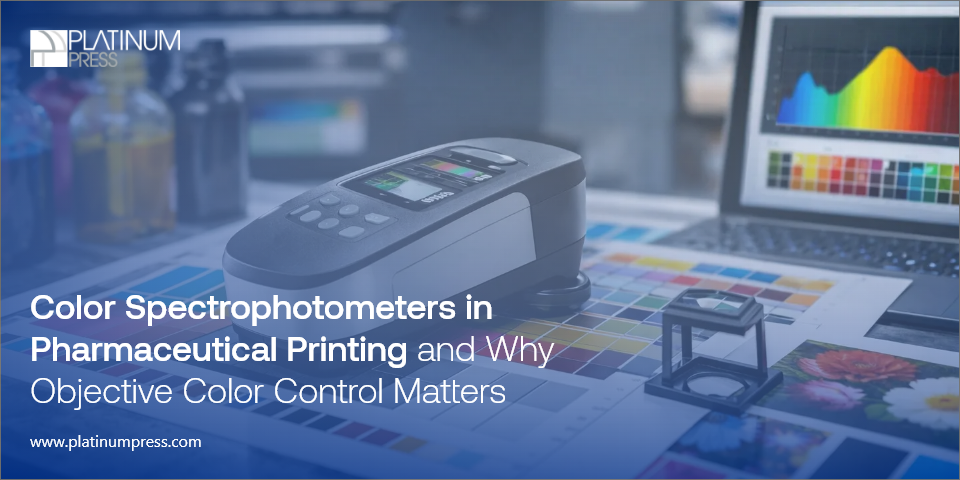
What Is a Color Spectrophotometer? 

A color spectrophotometer is a device that measures color objectively by analyzing how light is reflected from a printed surface. Rather than relying on human perception, it assigns numerical values to color, allowing for precise comparison against a defined standard. 

Modern printing systems integrate spectrophotometer color measurement directly into production through inline color control systems. These systems continuously monitor color throughout the run and make adjustments to maintain consistency. By using spectrophotometer labeled color samples, printers can compare every print run to the approved standards instantly. 

At Platinum Press, this technology is embedded into our printing workflow, enabling real-time color measurement and control across every sheet. This ensures that each spectrophotometer color reading is accurate and aligns with approved color specifications. We also use spectrophotometer portable systems for on-the-go checks in the production line to further ensure color consistency during various stages of printing. 

Understanding Delta E 

Color differences are commonly measured using a value called Delta E. Delta E represents the difference between a target color and the actual printed color. 

A lower Delta E value means a closer match. In pharmaceutical printing, tight Delta E tolerances are often required to ensure consistency across batches and reorders. For example, a Delta E value that is acceptable in commercial printing may not meet pharmaceutical standards. 

By using color measurement spectrophotometer systems, Platinum Press is able to measure and maintain these tolerances with precision rather than estimation. These precise measurements are vital to ensuring that color consistency is maintained throughout pharmaceutical packaging printing runs. 

Why Objective Measurement Is Better Than the Human Eye? 

The human eye is a powerful tool, but it is not a reliable measurement system. Spectrophotometer color analysis eliminates this variability by providing consistent, repeatable measurements that are not influenced by who is evaluating the color or where it is being viewed. 

Color perception can change based on lighting conditions, surrounding colors, and individual sensitivity. What looks acceptable in one environment may appear different in another. Over time, visual fatigue can also impact judgment. 

A color spectrophotometer eliminates this subjectivity and provides consistent, repeatable measurements. This shift from subjective evaluation to objective measurement is critical in pharmaceutical printing, where consistency must be proven, not assumed. 

Real Time Color Control in Production 

Modern inline color control systems use color spectrophotometer data to monitor and adjust color during production. Instead of checking color periodically, the system evaluates every sheet and maintains consistency across the entire run. 

This reduces variation, minimizes waste, and ensures that approved colors are maintained from the beginning of the run to the end. Real-time color measurement spectrophotometer systems continuously verify the color, allowing for immediate corrective action when needed. 

These systems also provide documentation and data that support audit readiness and quality verification. By using spectrophotometer color analysis, Platinum Press ensures that every printed sheet matches the approved color standards. 

Why This Matters for Pharmaceutical Packaging? 

Pharmaceutical companies rely on consistent, compliant packaging to maintain product integrity and build trust with consumers. Inconsistent color can lead to questions, delays, or additional review cycles that could jeopardize product release timelines. 

By using color spectrophotometer and inline color control systems, Platinum Press ensures that pharmaceutical label printing meets stringent regulatory expectations and delivers pharma printing that performs reliably across batches, products, and time. This approach ensures that the packaging consistently meets the exact standards required in pharmaceutical printing. 

Frequently Asked Questions 

1. What is a color spectrophotometer and how does it work in pharmaceutical printing? 

A color spectrophotometer is a device that measures color by analyzing how light is reflected off a printed surface. Unlike human perception, it assigns precise numerical values to color, ensuring objective measurements. This is crucial in pharmaceutical printing, where color consistency must be maintained across production runs. 

2. How does spectrophotometer color analysis improve pharma printing? 

Spectrophotometer color analysis provides an objective, measurable way to assess color accuracy. By using color measurement spectrophotometer systems, pharmaceutical printers can achieve consistent color output, reducing risks and ensuring regulatory compliance in pharma packaging printing. 

3. What is Delta E, and why is it important in color measurement spectrophotometer systems? 

Delta E represents the difference between a target color and the actual printed color. In pharmaceutical printing, tight Delta E tolerances are essential to maintain consistency. The color measurement spectrophotometer system helps measure and control Delta E, ensuring the color output matches the approved standard. 

4. Why is using a handheld color spectrophotometer in pharmaceutical printing advantageous? 

A handheld color spectrophotometer allows for easy, on-the-go color measurement in field environments or for smaller production runs. It provides flexibility while ensuring that color accuracy is consistently verified in the pharma printing process. 

5. How do color spectrophotometer support regulatory compliance in pharmaceutical packaging? 

Color spectrophotometer provide consistent, repeatable measurements of color, ensuring that every printed packaging component meets stringent pharmaceutical standards. By using these devices, pharmaceutical printers demonstrate a commitment to quality and compliance with regulatory requirements. 

pharmaceutical-printing-prevent-cross-contamination

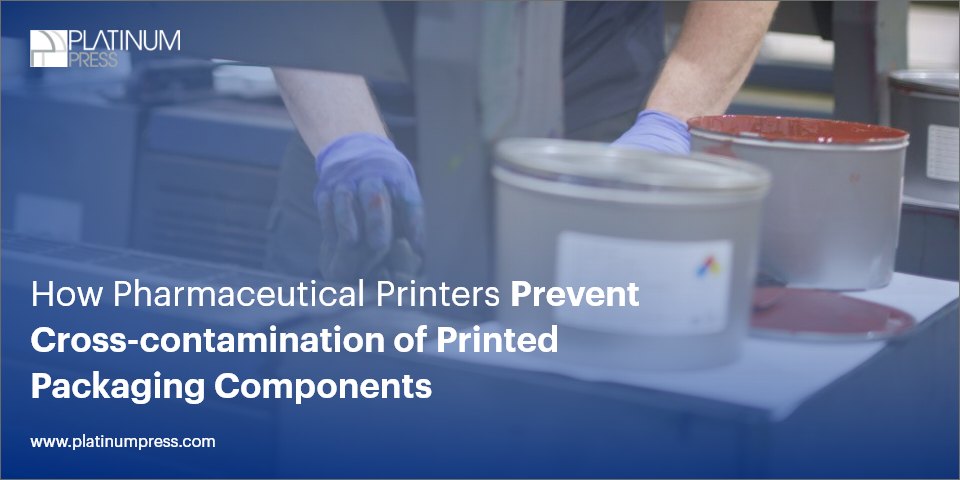
In pharmaceutical printing, preventing cross-contamination is a critical quality and regulatory requirement. Printed packaging components such as labels, cartons, and literature contain regulated product information and must be produced under strict controls to prevent mix-ups, carryover, or unintended use of materials from previous jobs. 

In both pharma printing and broader pharma packaging printing, even a minor lapse in process control can create serious compliance risks. Pharmaceutical companies rely on qualified pharmaceutical printers to ensure that every component is manufactured under clean, controlled, and traceable conditions. 

This article explains how pharmaceutical printing companies prevent cross-contamination of printed packaging components and how Platinum Press applies cGMP-driven controls to protect product integrity, regulatory compliance, and patient safety. 

Why Cross-Contamination Is a Risk in Pharmaceutical Printing? 

Unlike general commercial environments, pharmaceutical printing involves frequent job changeovers, multiple SKUs, similar artwork versions, and high regulatory scrutiny. In pharma printing, it is common to run different strengths, languages, or product versions back-to-back. Without proper controls, residual materials or documentation from a prior job could inadvertently enter a new production run. 

In pharma packaging printing, the risk is amplified when producing custom printed packaging programs with multiple revisions and regulated labeling elements. Cross-contamination in pharmaceutical label printing can result in incorrect labeling, regulatory findings, product recalls, and patient safety risks. 

Preventing these outcomes requires disciplined processes, documentation control, and independent oversight at every stage of production, standards that responsible pharmaceutical printing companies are expected to uphold. 

Line Clearance as a Core cGMP Control 

Line clearance is one of the most important safeguards in pharmaceutical printing and pharma printing. It ensures that equipment and work areas are completely free of materials, products, tooling, and documentation from previous jobs before new production begins. 

At Platinum Press, line clearance procedures apply across pharma packaging printing, pharmaceutical label printing, and carton production workflows. Production personnel remove and verify all printed components, substrates, inks, plates, tooling, job paperwork, and electronic records associated with the prior job. 

This disciplined approach is essential for pharmaceutical label printers operating in regulated environments where similar artwork versions may be produced sequentially. Proper line clearance reduces the risk of carryover materials and ensures that only approved components for the current job are present. 

Independent Line Clearance Approval by Quality 

Responsible pharmaceutical printers do not rely on a single layer of control. After production personnel complete line clearance, an independent Quality review is performed. 

In pharmaceutical printing companies that operate under cGMP principles, this separation of execution and verification reinforces accountability. Quality personnel confirm that no materials from previous runs remain and that documentation reflects the correct job specifications. 

This structured review process is particularly critical in pharmaceutical label printing, where incorrect labels can have direct regulatory and safety consequences. 

Segregation of Materials in Pharma Packaging Printing 

Material segregation is another essential control in pharma printing and pharma packaging printing. At Platinum Press, materials are clearly identified and segregated by job number and status. 

This includes raw materials, work in process, finished goods, and rejected components. Controlled staging areas and restricted movement prevent mixing between jobs, particularly in high-volume custom printed packaging programs. 

For pharmaceutical label printers, segregation prevents mix-ups between similar SKUs or dosage strengths. For pharmaceutical companies working with external pharmaceutical printing companies, this segregation is a key audit focus area. 

Controlled Documentation and Artwork Management 

Cross-contamination risks extend beyond physical materials. In pharmaceutical printing, outdated artwork or documentation can introduce compliance issues just as serious as material mix-ups. 

Platinum Press uses controlled systems for artwork, specifications, and documentation in both pharmaceutical label printing and broader pharma packaging printing programs. Obsolete documents are removed from production areas during line clearance. Electronic systems manage version control and approvals. 

These controls are critical for pharmaceutical printers producing multiple revisions of regulated labeling and custom printed packaging projects with frequent updates. 

In-Process Inspection and Automated Verification 

Modern pharma printing environments incorporate automated inspection systems to further reduce risk. These systems verify that printed components match approved artwork and specifications throughout production. 

In pharmaceutical label printing, automated verification checks barcode accuracy, text content, and version consistency. This level of control supports audit readiness and strengthens the quality systems expected of qualified pharmaceutical printing companies. 

If deviations are detected, production is stopped immediately. This prevents nonconforming materials from entering downstream conversion or shipment stages. 

Why Cross-Contamination Controls Matter? 

Pharmaceutical companies are responsible for the compliance of their entire supply chain. When evaluating pharmaceutical printers, audit teams assess line clearance, segregation, documentation control, and inspection processes. 

Robust cross-contamination controls protect both regulated pharma packaging printing operations and complex custom printed packaging programs. For brands relying on pharmaceutical label printers, these controls ensure that labels, cartons, and literature are produced accurately every time. 

A System-Based Approach to Pharmaceutical Printing 

Preventing cross-contamination in pharmaceutical printing is not a single checklist item. It is a system of interlocking controls that includes line clearance, independent quality approval, material segregation, and documentation discipline. 

At Platinum Press, these safeguards are embedded across all pharma printing, pharma packaging printing, and pharmaceutical label printing operations. By applying structured, cGMP-aligned processes, Platinum Press supports pharmaceutical companies seeking reliable, audit-ready pharmaceutical printers capable of producing compliant, custom-printed packaging under controlled conditions. 

Frequently Asked Questions 

1. What makes cross-contamination a serious risk in pharmaceutical printing? 

In pharmaceutical printing and pharma printing, packaging components contain regulated information such as dosage, strength, and usage instructions. Cross-contamination between jobs can lead to incorrect labeling, which may result in regulatory action, product recalls, or patient safety risks. 

2. How does line clearance prevent cross-contamination in pharma packaging printing? 

Line clearance ensures that all materials, documentation, and tooling from previous jobs are removed before a new run begins. In pharma packaging printing, and pharmaceutical label printing, this prevents carryover of incorrect components into the next production job. 

3. Why is independent quality approval important for pharmaceutical printers? 

Independent quality verification ensures that line clearance and setup activities were properly completed. In regulated environments, this separation of responsibility strengthens compliance and reinforces the accountability expected of professional pharmaceutical printing companies. 

4. How do pharmaceutical label printers manage multiple SKUs safely? 

Qualified pharmaceutical label printers use material segregation, documentation control, and in-process inspection systems to prevent mix-ups. These safeguards are particularly important when producing high-volume or versioned custom printed packaging programs. 

5. What should pharmaceutical companies look for in pharmaceutical printing companies? 

Pharmaceutical companies should evaluate line clearance procedures, segregation controls, inspection systems, and documentation management practices. Reliable pharmaceutical printers operating in pharma printing environments should demonstrate cGMP-aligned controls that prevent cross-contamination and protect product integrity. 

voc-free-inks-pharmaceutical-printing

In pharmaceutical printing, material selection extends far beyond appearance and performance. Inks, coatings, and substrates must meet strict safety, regulatory, and quality expectations. As sustainability and chemical transparency become increasingly important across regulated industries, VOC free inks are emerging as a critical advancement in pharmaceutical printed packaging. 

Today, pharmaceutical brands are increasingly evaluating eco friendly printer ink, sustainable ink, and advanced sustainable printing inks as part of their packaging strategies. In regulated pharma printing, the use of safer packaging inks is no longer optional. It is a performance and compliance decision. 

This article explains what VOC free inks are, why they matter in pharma packaging printing, and how Platinum Press is integrating next-generation pharmaceutical ink technology to support safety, performance, and sustainability. 

What are VOC-free inks? 

Volatile organic compounds, commonly referred to as VOCs, are chemicals that can evaporate into the air during printing and curing processes. In regulated environments such as pharma packaging printing, VOC emissions raise concerns related to worker safety, environmental impact, and potential downstream exposure. 

VOC free inks are formulated to eliminate these compounds while still delivering the color strength, adhesion, and durability required for high-quality printed packaging. These eco-friendly inks are designed to perform like traditional pharmaceutical ink, while functioning as a more environmentally friendly ink alternative. 

In pharmaceutical applications, VOC free formulations operate as both sustainable ink solutions and sustainable inks for packaging, supporting cleaner production environments while aligning with evolving regulatory and ESG expectations. 

Why VOC Free Inks Matter in Pharmaceutical Printing? 

Pharmaceutical packaging is closely scrutinized because it supports products intended for human health. While printed components are considered secondary packaging, the chemistry of pharmaceutical ink remains an important consideration, especially for indirect food and drug contact applications. 

Using eco friendly printer ink reduces emissions, supports safer manufacturing environments, and minimizes the presence of potentially hazardous substances within the supply chain. In modern pharma printing, brands increasingly demand sustainable printing inks that provide regulatory transparency. 

VOC free packaging inks also help companies comply with customer specifications that restrict certain chemical classes. For organizations focused on responsible sourcing, sustainable ink programs provide a measurable improvement in safety and environmental responsibility. 

Platinum Press’s Approach to VOC Free Digital Printing 

Platinum Press has commenced production using a digital printing system that employs sustainable inks for packaging that are free of volatile organic compounds, PFAS, and other carcinogenic substances. These advanced pharmaceutical ink formulations are FDA compliant for indirect food and drug contact. 

In addition to being VOC free, these eco-friendly inks exclude PFAS, Bisphenol A, trimethyl benzoyl diphenyl phosphine oxide, mineral oils, and certain heavy metals. This reflects a proactive investment in environmentally friendly ink systems for regulated pharma packaging printing. 

By implementing next generation sustainable printing inks, Platinum Press strengthens its ability to deliver compliant packaging inks without compromising performance. 

Performance Without Compromise 

Historically, safer chemistry raised questions about durability and color vibrancy. However, modern sustainable ink systems are engineered to perform at the highest standards of pharma printing. 

The digital system utilized by Platinum Press produces vibrant seven color output at true 1200 by 1200 pixel resolution, even at high operating speeds. These sustainable inks for packaging deliver clarity, sharp text, and barcode precision required in pharmaceutical labeling. 

This ensures that pharmaceutical ink performance remains consistent while operating as a safer eco friendly printer ink solution. In regulated pharma packaging printing, legibility and consistency are non-negotiable. 

Digital flexibility also supports short and medium run production, reducing waste while maintaining strict quality controls across all packaging inks applications. 

Supporting Sustainability Goals 

VOC free systems contribute directly to broader sustainability initiatives. By reducing emissions and eliminating certain hazardous substances, these eco-friendly inks and environmentally friendly ink formulations promote cleaner air and safer workplaces. 

Digital production enhances these benefits by minimizing overproduction. When paired with sustainable printing inks, this approach reduces waste associated with versioned artwork and regulatory updates. 

For pharmaceutical companies prioritizing ESG performance, sustainable ink programs in pharma printing offer tangible improvements in environmental impact while maintaining compliance. 

Applications Across Pharmaceutical Packaging 

The VOC free digital system supports labels, booklet style labels, and two ply extended text labels. These applications are common in pharma packaging printing, where regulatory clarity and information density are critical. 

In these formats, pharmaceutical ink must perform reliably across production, finishing, and distribution. Using advanced sustainable inks for packaging ensures that quality and compliance remain aligned. 

Offline finishing capabilities further ensure that these packaging inks maintain durability and readability throughout the product lifecycle. 

Looking Ahead 

As regulatory expectations continue to evolve, ink chemistry will remain a focus area in pharmaceutical printing. Eco friendly printer ink, sustainable ink, and advanced sustainable printing inks are becoming standard considerations in responsible pharma printing operations. 

VOC free technology represents a practical step forward in balancing safety, performance, and sustainability. By investing in modern environmentally friendly ink systems and advanced pharmaceutical ink platforms, Platinum Press continues to align production capabilities with the future of compliant pharma packaging printing. 

Frequently Asked Questions 

1. What is eco friendly printer ink in pharmaceutical printing? 

Eco friendly printer ink refers to ink formulations designed to minimize harmful emissions and hazardous chemical content. In regulated pharma printing, these inks function as sustainable inks for packaging while maintaining the performance standards required for pharmaceutical labeling and compliance. 

2. How do sustainable printing inks improve pharma packaging printing? 

Sustainable printing inks reduce VOC emissions and eliminate certain restricted substances. In pharma packaging printing, this improves worker safety, supports regulatory transparency, and aligns packaging with corporate sustainability commitments without compromising pharmaceutical ink performance. 

3. Are sustainable inks for packaging compliant with FDA standards? 

Modern sustainable inks for packaging used in pharmaceutical applications are often formulated to meet FDA requirements for indirect food and drug contact. These advanced pharmaceutical ink systems balance safety, durability, and print clarity. 

4. What is the difference between traditional packaging inks and environmentally friendly ink? 

Traditional packaging inks may contain VOCs or other regulated substances. An environmentally friendly ink is formulated to reduce emissions and eliminate restricted compounds, making it more suitable for regulated pharma printing environments. 

5. Why is pharmaceutical ink chemistry important in regulated industries? 

The chemistry of pharmaceutical ink impacts worker safety, environmental exposure, and regulatory compliance. Using eco-friendly inks and sustainable ink systems ensures safer operations while maintaining quality and durability in pharma packaging printing.