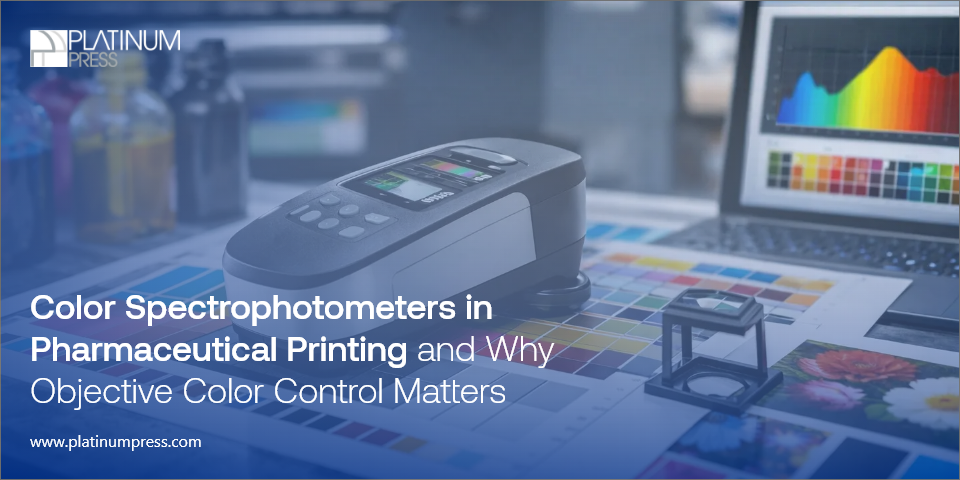
Color Spectrophotometers in Pharmaceutical Printing and Why Objective Color Control Matters
In pharmaceutical printing, color is not just about appearance. It is a controlled quality attribute. Color spectrophotometers are an essential tool for ensuring that the color quality of printed packaging components meets strict regulatory requirements. These color measurement instruments eliminate subjectivity and help ensure consistency throughout the production process.
Consistent color helps differentiate products, maintain brand recognition, and support accuracy across packaging lines. Even small variations can raise questions during audits or create confusion in the marketplace. Because of this, color must be measured, controlled, and repeatable. Spectrophotometer color analysis ensures that color remains consistent across all packaging components, helping to prevent discrepancies.
The way color is evaluated in pharmaceutical printing has evolved significantly. Today, pharmaceutical printers rely on color spectrophotometers and automated control systems to remove subjectivity and ensure consistency. These systems use color measurement instruments that provide precise, objective measurements, eliminating human error in the process. The use of spectrophotometer portable devices has also become more common, offering flexibility for on-site color checks.
How Color Was Evaluated in the Past?
Traditionally, printers relied on visual standards to evaluate color. A press operator would create a set of printed samples, often referred to as light, standard, and dark versions of a color. These samples would be reviewed and approved by the client, and production would then aim to match the selected standard by eye.
While this approach was widely accepted at the time, it was inherently subjective. Color perception varies from person to person. Lighting conditions, viewing angles, and even fatigue can influence how color is interpreted.
In a regulated pharma printing environment, that level of subjectivity introduces significant risk. Spectrophotometer color analysis helps eliminate this issue by providing objective color readings. For example, color spectrophotometers assign numerical values to color, ensuring that the color quality is consistent and measurable across the production run. These devices ensure that every color meets the required specifications, reducing the possibility of human error.
What Is a Color Spectrophotometer?
A color spectrophotometer is a device that measures color objectively by analyzing how light is reflected from a printed surface. Rather than relying on human perception, it assigns numerical values to color, allowing for precise comparison against a defined standard.
Modern printing systems integrate spectrophotometer color measurement directly into production through inline color control systems. These systems continuously monitor color throughout the run and make adjustments to maintain consistency. By using spectrophotometer labeled color samples, printers can compare every print run to the approved standards instantly.
At Platinum Press, this technology is embedded into our printing workflow, enabling real-time color measurement and control across every sheet. This ensures that each spectrophotometer color reading is accurate and aligns with approved color specifications. We also use spectrophotometer portable systems for on-the-go checks in the production line to further ensure color consistency during various stages of printing.
Understanding Delta E
Color differences are commonly measured using a value called Delta E. Delta E represents the difference between a target color and the actual printed color.
A lower Delta E value means a closer match. In pharmaceutical printing, tight Delta E tolerances are often required to ensure consistency across batches and reorders. For example, a Delta E value that is acceptable in commercial printing may not meet pharmaceutical standards.
By using color measurement spectrophotometer systems, Platinum Press is able to measure and maintain these tolerances with precision rather than estimation. These precise measurements are vital to ensuring that color consistency is maintained throughout pharmaceutical packaging printing runs.
Why Objective Measurement Is Better Than the Human Eye?
The human eye is a powerful tool, but it is not a reliable measurement system. Spectrophotometer color analysis eliminates this variability by providing consistent, repeatable measurements that are not influenced by who is evaluating the color or where it is being viewed.
Color perception can change based on lighting conditions, surrounding colors, and individual sensitivity. What looks acceptable in one environment may appear different in another. Over time, visual fatigue can also impact judgment.
A color spectrophotometer eliminates this subjectivity and provides consistent, repeatable measurements. This shift from subjective evaluation to objective measurement is critical in pharmaceutical printing, where consistency must be proven, not assumed.
Real Time Color Control in Production
Modern inline color control systems use color spectrophotometer data to monitor and adjust color during production. Instead of checking color periodically, the system evaluates every sheet and maintains consistency across the entire run.
This reduces variation, minimizes waste, and ensures that approved colors are maintained from the beginning of the run to the end. Real-time color measurement spectrophotometer systems continuously verify the color, allowing for immediate corrective action when needed.
These systems also provide documentation and data that support audit readiness and quality verification. By using spectrophotometer color analysis, Platinum Press ensures that every printed sheet matches the approved color standards.
Why This Matters for Pharmaceutical Packaging?
Pharmaceutical companies rely on consistent, compliant packaging to maintain product integrity and build trust with consumers. Inconsistent color can lead to questions, delays, or additional review cycles that could jeopardize product release timelines.
By using color spectrophotometer and inline color control systems, Platinum Press ensures that pharmaceutical label printing meets stringent regulatory expectations and delivers pharma printing that performs reliably across batches, products, and time. This approach ensures that the packaging consistently meets the exact standards required in pharmaceutical printing.
Frequently Asked Questions
1. What is a color spectrophotometer and how does it work in pharmaceutical printing?
A color spectrophotometer is a device that measures color by analyzing how light is reflected off a printed surface. Unlike human perception, it assigns precise numerical values to color, ensuring objective measurements. This is crucial in pharmaceutical printing, where color consistency must be maintained across production runs.
2. How does spectrophotometer color analysis improve pharma printing?
Spectrophotometer color analysis provides an objective, measurable way to assess color accuracy. By using color measurement spectrophotometer systems, pharmaceutical printers can achieve consistent color output, reducing risks and ensuring regulatory compliance in pharma packaging printing.
3. What is Delta E, and why is it important in color measurement spectrophotometer systems?
Delta E represents the difference between a target color and the actual printed color. In pharmaceutical printing, tight Delta E tolerances are essential to maintain consistency. The color measurement spectrophotometer system helps measure and control Delta E, ensuring the color output matches the approved standard.
4. Why is using a handheld color spectrophotometer in pharmaceutical printing advantageous?
A handheld color spectrophotometer allows for easy, on-the-go color measurement in field environments or for smaller production runs. It provides flexibility while ensuring that color accuracy is consistently verified in the pharma printing process.
5. How do color spectrophotometer support regulatory compliance in pharmaceutical packaging?
Color spectrophotometer provide consistent, repeatable measurements of color, ensuring that every printed packaging component meets stringent pharmaceutical standards. By using these devices, pharmaceutical printers demonstrate a commitment to quality and compliance with regulatory requirements.