g7-master-qualification-in-pharmaceutical-printing

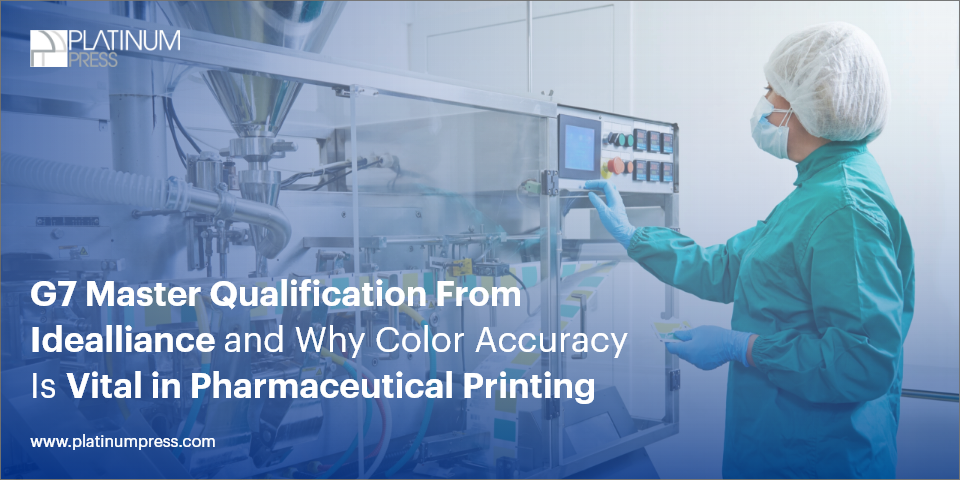
In pharmaceutical printing, color is not a design preference. It is a controlled quality attribute. Packaging color plays a critical role in product identification, brand consistency, regulatory confidence, and patient safety. Even small variations in color can raise concerns during audits, create confusion in the marketplace, or trigger costly reprints. 

G7 Master Qualification from Idealliance is the industry’s gold standard for achieving precise, repeatable color across printing platforms. This article explains what G7 certification is, why pharmaceutical color accuracy matters in pharmaceutical printing, and how Platinum Press applies G7 principles to deliver consistent results from proof to press to final package. 

What Is G7 Master Qualification? 

G7 certification is a color calibration and process control methodology developed by Idealliance to ensure visual consistency across different printing technologies, substrates, and production runs. G7 certification printing verifies that a printing facility can achieve a neutral, balanced gray scale and predictable color output under controlled conditions. 

Rather than relying solely on device-specific profiles, G7 focuses on visual appearance. The goal is for colors to look the same across different print methods, materials, and presses. This makes G7 certification particularly valuable in complex production environments such as pharmaceutical printing, where consistency across products and formats is essential. 

A G7 certified master printer has demonstrated the ability to calibrate and maintain presses to meet strict color performance standards. At Platinum Press, our G7 certification printing ensures that every print job meets stringent color accuracy requirements, regardless of the substrate or production scale. 

Why Color Accuracy Matters in Pharmaceutical Printing? 

In pharmaceutical packaging, pharmaceutical color is often used to differentiate strengths, formulations, product families, or therapeutic categories. Consistent color helps healthcare professionals, pharmacists, and patients quickly recognize products and avoid confusion. 

Color variation can introduce risk. Inconsistent packaging appearance may lead to questions during audits, delays in product release, or concerns about counterfeit or diverted product. For regulated brands, predictable color is a quality requirement, not a cosmetic feature. 

Accurate color reproduction also ensures that proofs match final production. This reduces approval cycles, prevents rework, and supports faster time to market. G7 color certification ensures that colors remain consistent and accurate from the first proof to the final printed packaging. 

How G7 Supports Repeatability and Predictability 

G7 Master Qualification ensures that printing systems are calibrated to produce consistent visual results every time. This repeatability allows pharmaceutical brands to trust that approved colors will remain stable across batches, reorders, and long-term product lifecycles. 

By standardizing color appearance rather than relying on press-specific adjustments, G7 minimizes variation caused by changes in materials, equipment, or production conditions. The result is a predictable color from proof through final printed packaging. With G7 certified printing systems in place, every print job upholds the highest standards of pharmaceutical color accuracy. 

G7 and Cost Efficiency in Pharmaceutical Printing 

Color inconsistency leads to waste. Reprints, rejected lots, extended press runs, and additional approvals all increase cost and delay. 

G7 certification helps reduce these inefficiencies by stabilizing color output upfront. With properly calibrated systems, fewer adjustments are needed during production, ink usage is optimized, and scrap is reduced. This supports both cost control and sustainability initiatives without compromising quality. 

G7 Within a cGMP Printing Environment 

At Platinum Press, G7 Master Qualification is integrated within a cGMP-compliant production environment. Color accuracy is managed in accordance with documented procedures, inspection controls, and electronic verification systems. 

G7 certification printing works in combination with inline inspection, color measurement tools, and quality management processes to ensure that color performance is monitored and maintained throughout production. This layered approach supports audit readiness and consistent regulatory compliance. 

Why G7 Matters for Pharmaceutical and Consumer Health Brands? 

For pharmaceutical and consumer health brands, packaging consistency reinforces trust. Patients and healthcare professionals expect products to look the same every time they are dispensed. G7 Master Qualification helps ensure that expectations are met. 

By choosing a G7 certified master printer, brands gain confidence that color accuracy, repeatability, and predictability are built into the production process. G7 certification ensures pharmaceutical color accuracy is upheld from start to finish. 

Color Accuracy as a Quality Standard 

G7 Master Qualification is not a one-time achievement. It requires ongoing calibration, monitoring, and discipline. At Platinum Press, G7 is a core component of how color quality is managed across labels, cartons, and printed literature. 

In pharmaceutical printing, where accuracy is non-negotiable, G7 Master Qualification helps ensure that every package reflects the same level of control, consistency, and quality that patients and regulators expect. By maintaining G7 certification in our processes, we uphold the highest standards of color accuracy for every product. 

Frequently Asked Questions 

1. What is G7 certification in pharmaceutical printing? 

G7 certification refers to a process control methodology that ensures color consistency across various printing technologies. In pharmaceutical printing, G7 certification printing guarantees that the packaging maintains color accuracy from proof to press to final package. 

2. How does G7 certification printing ensure color accuracy? 

G7 certification printing ensures color accuracy by calibrating printing presses to achieve consistent results. This allows pharmaceutical brands to rely on repeatable color output across all printing runs, ensuring visual consistency and regulatory compliance. 

3. What are the benefits of being a G7 certified master printer? 

A G7 certified master printer demonstrates the ability to produce precise, predictable color output across various substrates and production runs. This ensures color consistency and reduces the risk of costly errors or reprints in pharmaceutical packaging. 

4. How does G7 color certification impact pharmaceutical packaging? 

G7 color certification ensures that color is reproduced accurately and consistently throughout the production process. This minimizes the risk of color variation, supporting both regulatory compliance and brand consistency in pharmaceutical packaging. 

5. Why is color accuracy vital in pharmaceutical printing? 

Color accuracy is crucial in pharmaceutical printing because it ensures product differentiation, aids in identification, and avoids confusion. Inconsistent color can trigger regulatory concerns, product recalls, and compromise patient safety. 

6. How does G7 certification printing help pharmaceutical brands? 

By achieving G7 certification, pharmaceutical brands can trust that their packaging will maintain color accuracy, repeatability, and predictability across all print runs. This results in higher quality packaging and supports audit readiness and regulatory compliance. 
why-ecovadis-matters-in-pharmaceutical-packaging

In pharmaceutical packaging, documentation is just as critical as the printed components themselves. Labels, cartons, and printed literature must meet approved specifications, and pharmaceutical companies must be able to prove that they do. This is where a certificate of conformance plays an essential role. 

This article explains what is a certificate of conformance, why it matters in pharmaceutical printing, and how it supports regulatory compliance, quality assurance, and audit readiness. 

What Is a Certificate of Conformance 

A certificate of conformance is a formal document issued by a supplier stating that the products delivered meet all agreed-upon specifications, regulatory requirements, and quality standards. In pharmaceutical printing, this typically includes confirmation that labels, cartons, or literature were produced in accordance with approved artwork, materials, processes, and quality controls. 

A certificate of conformance ensures that the finished printed components meet quality of conformance standards, confirming that they are compliant with all regulatory guidelines. This certificate plays a crucial role in maintaining process conformance, especially in pharmaceutical packaging design, where precise labeling and documentation are critical. 

What Information Is Included in a Certificate of Conformance 

A certificate of conformance generally includes key details such as product identification, job or batch numbers, quantity, revision or artwork version, and confirmation that production followed approved specifications. 

It may also reference applicable quality systems, inspection results, and compliance with cGMP requirements. This documentation provides traceability and serves as a formal quality release statement from the printer. By offering this documentation, the printing company demonstrates that pharmaceutical packaging design is fully compliant with regulatory requirements. 

Why Certificates Matter in Pharmaceutical Printing 

Pharmaceutical packaging components are regulated items. Errors in labeling or packaging can lead to serious consequences, including recalls, regulatory findings, and risks to patient safety. 

A certificate of conformance provides assurance that quality controls were followed throughout production and that the finished components meet requirements before they enter the pharmaceutical packaging supply chain. It supports internal quality reviews and helps pharmaceutical companies demonstrate supplier compliance during audits and inspections. 

Certificates also create accountability. By formally attesting to conformance, the printing partner accepts responsibility for meeting specifications. A reliable pharma packaging company consistently issues accurate certificates of conformance, showcasing its commitment to quality and compliance. 

Certificates of Conformance and Regulatory Expectations 

Regulatory agencies expect pharmaceutical companies to maintain complete documentation for all components used in drug products, including printed packaging. Certificates of conformance support this expectation by providing evidence that suppliers operate under controlled, compliant systems. 

During audits, certificates of conformance are often reviewed alongside batch records, artwork approvals, and inspection reports. Having clear, accurate certificates simplifies audits and reduces the need for additional documentation requests. This ensures that the pharmaceutical company remains audit ready and compliant. 

How Certificates Support Traceability and Risk Management 

Certificates of conformance help link finished printed components back to specific production runs, materials, and inspection activities. This traceability is critical for investigations, change management, and corrective actions if issues arise. 

In the event of a complaint or deviation, certificates of conformance provide a documented starting point for root cause analysis. They also help ensure that only approved, conforming materials are released for use. Having these certificates readily available supports quality of conformance and process conformance. 

Certificates of Conformance at Platinum Press 

Platinum Press provides certificates of conformance as part of its commitment to quality and regulatory support in pharmaceutical printing. Certificates of conformance are issued based on controlled production processes, documented inspections, and adherence to approved specifications. 

By integrating certificates of conformance into its cGMP and ISO 9001:2015-aligned quality systems, Platinum Press helps pharmaceutical clients maintain compliance, traceability, and confidence in their printed packaging supply chain. Whether for labels, cartons, or printed literature, Platinum Press ensures all printed materials are in conformance with pharmaceutical packaging design specifications. 

Why Certificates of Conformance Matter When Choosing a Printing Partner 

Not all printers provide the same level of documentation or quality assurance. A pharmaceutical printing partner that consistently issues accurate certificates of conformance demonstrates a strong quality culture and an understanding of regulatory expectations. 

For pharmaceutical companies, certificates of compliance are not just paperwork. They are a critical link between printed packaging components and the regulatory obligations that protect patients and brands. Working with a reliable pharma packaging company that prioritizes certificate of conformance issuance ensures that packaging meets both quality of conformance and process conformance standards. 

Frequently Asked Questions 

1. What is a certificate of conformance in pharmaceutical printing? 

A certificate of conformance is a formal document issued by a supplier confirming that their products meet all agreed-upon specifications and cGMP standards. In pharmaceutical printing, this includes ensuring the pharmaceutical packaging design and materials adhere to regulatory and quality control requirements. 

2. What information is included in a certificate of conformance? 

A certificate of conformance typically includes product identification, job or batch numbers, quantity, artwork version, and confirmation of conformance to pharmaceutical packaging design and cGMP requirements. It also documents inspection results and quality system compliance. 

3. Why do certificates of conformance matter in pharmaceutical packaging? 

Certificates of conformance are essential for regulatory compliance and audit readiness. They assure that pharmaceutical packaging, such as labels and cartons, meets the agreed specifications, supporting traceability, quality control, and compliance during audits and inspections. 

4. How does certification printing support pharmaceutical compliance? 

Certification printing ensures that all printed components are produced according to approved processes and specifications, meeting regulatory requirements. It provides pharmaceutical companies with the necessary documentation to demonstrate process conformance and audit readiness. 

5. What is the role of pharmaceutical packaging design in a certificate of conformance? 

Pharmaceutical packaging design is critical in ensuring printed materials meet regulatory requirements. A certificate of conformance confirms that pharmaceutical packaging design adheres to quality of conformance and cGMP standards throughout production. 

6. How does traceability support pharmaceutical compliance? 

Traceability is essential in pharmaceutical printing. Certificates of conformance link finished printed components back to specific production runs, ensuring quality of conformance and providing a documented starting point for corrective actions and root cause analysis in case of deviations. 

inline-vision-inspection-and-why-100-percent-inspection-is-critical-in-pharmaceutical-printing

In pharmaceutical packaging, accuracy is not negotiable. Printed components such as labels, cartons, and literature carry regulated information that directly impacts product identity, dosing, and patient safety. Even minor defects can lead to serious regulatory consequences, including recalls and shipment delays. 

Inline vision inspection plays a critical role in preventing these risks. This article explains what inline vision inspection is, why 100% inspection is essential in pharmaceutical printing, and how Platinum Press applies vision inspection across printing and finishing operations to ensure consistent, compliant results. 

What Is Inline Vision Inspection? 

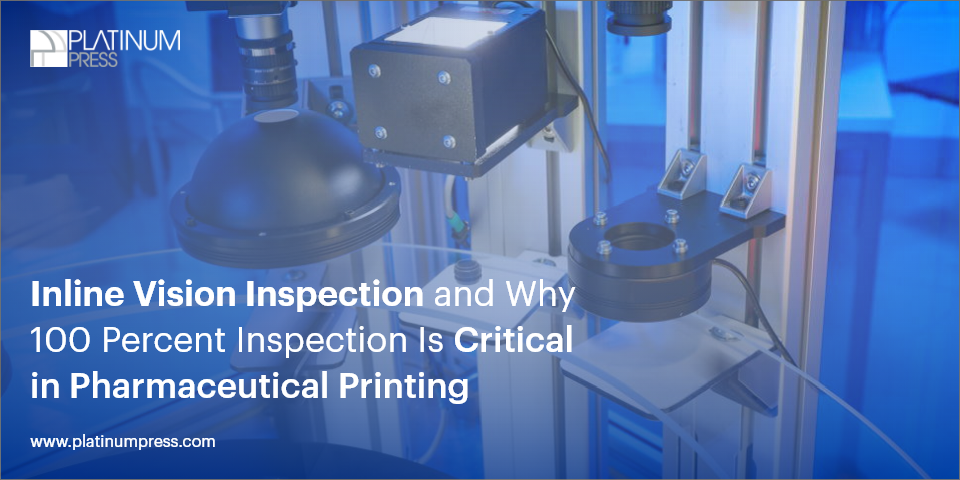
Inline vision inspection is an automated quality control system that uses high-resolution cameras and software to inspect printed materials in real time as they move through production. Unlike sampling inspection, inline vision inspection systems evaluate 100 percent of the units produced against approved standards, ensuring comprehensive packaging quality control. 

These systems are designed to detect defects such as missing or incorrect text, color variation, registration errors, barcode issues, print defects, and finishing errors. When a deviation is detected, the system can alert operators or automatically remove nonconforming material from the production stream. 

Inline vision inspection is particularly important in pharmaceutical printing, where errors may not be visible to the human eye or may occur intermittently at high speeds. By integrating print inspection systems, Platinum Press ensures that every printed component meets pharmaceutical packaging requirements and cGMP standards. 

Why 100 Percent Vision Inspection Matters in Pharma? 

Pharmaceutical regulations require that labeling and packaging components be produced accurately and consistently. Relying solely on manual inspection or sampling inspection introduces risk, especially for high-volume runs or complex artwork. A 100 percent vision inspection system ensures that every label, carton, and piece of printed literature is checked against approved specifications. 

This reduces the risk of undetected defects entering the supply chain and provides greater confidence during audits and regulatory inspections. Vision inspection also supports traceability and documentation, both of which are essential components of cGMP-compliant operations. 

By using 100% inspection throughout production, pharmaceutical companies can ensure that their packaging meets the highest standards for accuracy, legibility, and compliance. 

Vision Inspection Across Printing Operations 

At Platinum Press, inline vision inspection is integrated directly into printing workflows. As materials are printed, vision systems continuously monitor key attributes such as content accuracy, color consistency, registration, and barcode readability. 

By inspecting every printed unit during production, potential issues are identified immediately rather than after a run is complete. This allows for corrective action to be taken quickly, minimizing waste and preventing nonconforming material from progressing downstream. 

This approach supports consistent quality across labels, cartons, and printed literature, regardless of run size or complexity. Printing inspection systems help guarantee that every unit meets regulatory requirements and is fully compliant with pharmaceutical packaging standards. 

Vision Inspection in Finishing and Conversion 

Vision inspection does not stop at printing. The finishing and conversion stages introduce additional risk if not properly controlled. Cutting, folding, gluing, and other finishing processes can create defects that impact usability or compliance. 

Platinum Press applies vision inspection during finishing operations to ensure that printed components remain compliant through final conversion. This includes vision inspection on label finishing equipment and within carton folder gluer operations, where systems verify correct construction, alignment, and integrity. 

By extending vision inspection into finishing, Platinum Press provides full process coverage from print through the final packaged component. This ensures that pharmaceutical packaging remains compliant with cGMP standards all the way to the finished product. 

Benefits of Inline Vision Inspection for Pharmaceutical Companies 

Inline 100 percent vision inspection offers several key benefits for pharmaceutical companies. It reduces the likelihood of recalls by identifying defects before products leave the facility. It improves audit readiness by demonstrating robust, automated quality controls. It also supports faster root cause analysis by providing detailed inspection data. 

Most importantly, it helps ensure that patients receive products with accurate, legible, and compliant packaging every time. 

A quality first approach to pharmaceutical printing ensures that inline vision inspection is not an add-on feature. It is a core component of a modern pharmaceutical printing quality system. By implementing 100 percent vision inspection across both printing and finishing processes, Platinum Press reinforces its commitment to accuracy, consistency, and regulatory compliance. 

Partnering With Platinum Press for Vision Inspection in Pharmaceutical Printing 

Platinum Press combines advanced press technology with years of pharmaceutical printing expertise. Inline vision inspection on our presses is one of several key finishing capabilities available to support compliant, high-quality pharmaceutical packaging solutions. 

With experience across labels, cartons, printed literature, and combination products, Platinum Press helps pharmaceutical brands integrate 100 percent vision inspection in a way that enhances design while maintaining accuracy, consistency, and compliance. Whether for small batch runs or complex multi-SKU programs, Platinum Press is your partner in delivering pharma packaging solutions that are both innovative and compliant. 

Frequently Asked Questions 

1. What is inline vision inspection in pharmaceutical printing? 

Inline vision inspection is a quality control process that uses high-resolution cameras and software to check every printed component for defects in real time. It ensures that all printed materials meet pharmaceutical packaging standards and 100% inspection criteria. 

2. Why is 100 percent inspection important in pharmaceutical packaging? 

100 percent inspection ensures that every label, carton, and piece of printed literature is checked against approved specifications. This reduces the risk of defects entering the supply chain and supports audit readiness in pharmaceutical packaging. 

3. How does vision inspection support pharmaceutical labeling? 

Vision inspection in pharmaceutical labeling ensures that all printed information, including dosage, product names, and barcodes, meets cGMP compliance. It helps identify errors such as incorrect text, missing elements, or color variations that could compromise patient safety. 

4. Can print inspection systems detect all types of printing errors? 

Yes, print inspection systems are designed to detect a wide range of errors, including missing text, registration issues, color discrepancies, and barcode problems. These systems provide real-time feedback and prevent nonconforming materials from progressing through the production process. 

5. How do pharma packaging companies benefit from 100% inspection? 

Pharma packaging companies benefit from 100% inspection by reducing the likelihood of regulatory findings, recalls, and product errors. It ensures that all packaging components, including labels and cartons, are compliant with pharmaceutical standards. 

6. What are the benefits of implementing vision inspection in pharmaceutical finishing processes? 

Implementing vision inspection during finishing processes helps verify that the printed components maintain compliance through cutting, folding, and gluing stages. It ensures that the final pharmaceutical packaging meets all regulatory standards and patient safety requirements. 

what-iso-90012015-means-for-pharmaceutical-printing-partners

Quality in pharmaceutical printing is not achieved through inspection alone. It requires structured systems, leadership accountability, and continuous improvement. ISO 9001:2015 provides the framework that supports these objectives. 

This article explains what ISO 9001:2015 means in the context of pharmaceutical printing and how Platinum Press applies this standard to deliver consistent, reliable results as an ISO 9001 certified company serving regulated markets. 

What Is ISO 9001:2015 

ISO 9001:2015 is an internationally recognized quality management system standard focused on consistency, risk based thinking, and continual improvement. It applies across industries, including highly regulated environments such as pharmaceutical printing. 

ISO 9001:2015 requires organizations to define and document processes, monitor performance, manage risk, conduct internal audits, and engage leadership in quality oversight. It emphasizes prevention over correction and system driven quality over individual dependency. For pharmaceutical printing partners, ISO 9001 certification provides a structured approach to managing quality across every stage of production. 

Why ISO 9001:2015 Matters in Pharmaceutical Printing 

Pharmaceutical printing involves complex workflows, frequent artwork revisions, regulatory scrutiny, and strict delivery requirements. ISO 9001:2015 helps ensure that these complexities are managed through controlled, repeatable systems rather than reactive fixes. 

For pharmaceutical companies, working with an ISO 9001 certified company provides confidence that quality controls are standardized across projects, teams, and production lines. It reduces variability and supports predictable outcomes regardless of job size or complexity. Within pharmaceutical ISO standards, ISO 9001:2015 plays a critical role in ensuring operational consistency and documentation discipline. 

How Platinum Press Applies ISO 9001:2015 

Platinum Press maintains ISO 9001:2015 certification to support structured quality management across the organization. This includes documented processes, internal audits, corrective and preventive action systems, and ongoing performance evaluation aligned with pharmaceutical ISO standards. 

Risk based thinking is applied to identify potential issues before they impact production. Management reviews ensure accountability and continuous improvement at the leadership level. These practices reinforce ISO certification as a living system rather than a static credential. 

ISO 9001:2015 works alongside cGMP principles at Platinum Press to create a comprehensive quality framework tailored specifically to pharmaceutical printing requirements. 

ISO 9001:2015 and Risk Based Thinking in Pharmaceutical Printing 

A key differentiator of ISO 9001:2015 is its emphasis on risk based thinking. In pharmaceutical printing, risk can arise from artwork changes, version control, material substitutions, or process deviations. ISO 9001 certification requires organizations to identify these risks proactively and establish controls to mitigate them. 

By embedding risk based thinking into daily operations, an ISO 9001 certified company strengthens process reliability and reduces the likelihood of errors that could impact compliance or supply continuity. This approach supports long term quality outcomes rather than short term corrections. 

ISO 9001:2015 as a Foundation for Regulatory Confidence 

While ISO 9001:2015 is not a regulatory requirement on its own, it supports broader pharmaceutical ISO standards and regulatory expectations. The emphasis on documentation, traceability, corrective actions, and leadership involvement aligns with the scrutiny pharmaceutical companies face during audits. 

Choosing a pharmaceutical printing partner with ISO 9001 certification helps organizations demonstrate supplier oversight and quality system maturity. It signals that quality is embedded into operations rather than managed after the fact. 

Choosing an ISO 9001 Certified Printing Partner 

When selecting a pharmaceutical printing partner, ISO 9001:2015 certification signals operational maturity, process discipline, and a commitment to quality beyond minimum compliance. It reflects an organization’s ability to manage change, maintain consistency, and continuously improve. 

An ISO 9001 certified company is better equipped to support regulatory audits, manage evolving requirements, and deliver consistent results over time. In pharmaceutical printing, ISO 9001 certification is more than a credential. It is a foundation for trust, reliability, and long term partnership. 

Frequently Asked Questions 

1. What does ISO 9001:2015 mean for pharmaceutical printing quality?

ISO 9001:2015 establishes a structured quality management system that emphasizes consistency, risk based thinking, and continuous improvement. In pharmaceutical printing, it helps ensure that processes are documented, controlled, and repeatable, reducing variability and supporting reliable outcomes across all projects. 

2. How does ISO 9001 certification support the pharmaceutical ISO standards? 

ISO 9001 certification complements pharmaceutical ISO standards by reinforcing documentation, traceability, and process control. While it does not replace regulatory requirements, it provides a strong operational foundation that supports compliance, audit readiness, and quality oversight within pharmaceutical printing environments. 

3. Why should pharmaceutical companies work with an ISO 9001-certified company? 

Working with an ISO 9001-certified company provides confidence that quality systems are standardized and consistently applied. It demonstrates that leadership is accountable for quality and that processes are designed to prevent issues rather than correct them after production. 

4. Is ISO 9001 certification required for pharmaceutical printing partners?

ISO 9001 certification is not always required, but it is widely recognized as a best practice. For pharmaceutical companies, partnering with an ISO 9001 certified printing provider helps strengthen supplier qualification, quality assurance, and long term reliability. 

5. How does risk based thinking apply to pharmaceutical printing?

Risk based thinking requires identifying potential quality risks before they affect production. In pharmaceutical printing, this includes managing artwork changes, materials, and workflow complexity. ISO 9001:2015 embeds this approach into daily operations to support proactive quality control. 

6. How does ISO certification improve long term supplier relationships?

ISO certification promotes consistency, transparency, and continuous improvement. Over time, this leads to fewer disruptions, clearer communication, and greater trust between pharmaceutical companies and their printing partners. 

cold-foil-in-pharmaceutical-packaging-and-how-platinum-press-integrates-it-into-your-design

Pharmaceutical packaging must meet strict regulatory requirements while also supporting brand recognition and product differentiation. While accuracy, legibility, and consistency are essential, visual design elements can play a meaningful role in how products are identified and trusted. Cold foil printing allows pharmaceutical brands to add refined metallic accents without compromising compliance. 

This article explains what cold foil is, why it is used in pharmaceutical packaging, and how Platinum Press integrates cold foil printing and metallic foil printing into compliant printed packaging using advanced press technology and controlled quality systems. 

What Is Cold Foil and How Does It Work 

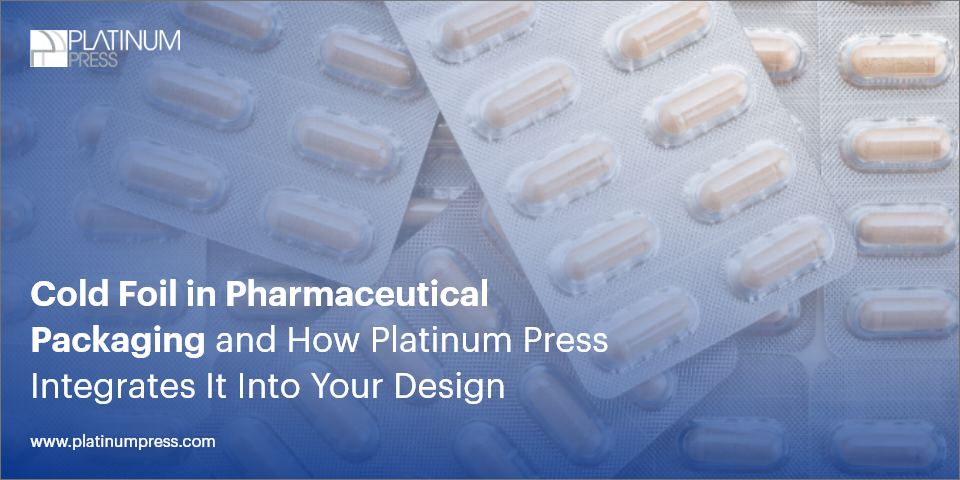
Cold foil is a printing process that applies metallic foil selectively to specific design elements rather than covering an entire area. Unlike traditional foil stamp printing or hot foil techniques, cold foil printing uses pressure sensitive adhesives and is transferred inline on the press without heat. This makes cold foil stamping well suited for pharmaceutical substrates and regulated packaging components. 

Because cold foil printing is applied during the printing process, it can be precisely registered with other printed elements. This allows metallic highlights to be placed exactly where intended, such as product names, logos, or key design features, while maintaining readability and regulatory clarity. Cold stamping foil techniques support high resolution detail and consistent results across long and short runs. 

Why Cold Foil Is Used in Pharmaceutical Packaging 

In pharmaceutical packaging, cold foil printing is commonly used to enhance branding without overwhelming the design or interfering with required information. Custom foil printing can help differentiate strengths, formulations, or product families while preserving a clean and professional appearance. 

Metallic foil printing can also support anti counterfeiting strategies when used in combination with other print and finishing techniques. When properly engineered, foil label printing and silver foil printing maintain barcode readability, text contrast, and inspection reliability. Cold foil stamping provides visual enhancement while supporting compliance requirements for regulated products. 

Cold Foil Capabilities at Platinum Press 

Platinum Press offers advanced cold foil printing services integrated directly into high precision offset presses. As a pharmaceutical focused foil printing company, Platinum Press engineers foil printing services to meet regulatory expectations while delivering consistent visual quality. 

Our presses support consistent registration, sharp detail, and repeatability across long and short runs. This enables Platinum Press to apply cold foil stamping and metallic foil printing with a high level of control, ensuring uniform appearance and performance from the first sheet to the last. Custom foil printing programs are managed to ensure consistent results across multiple SKUs and product lines. 

Cold foil applications are engineered to work with a range of substrates commonly used in pharmaceutical packaging, including paperboard and coated stocks. Foil label printing and foil printing services are validated to ensure compatibility with downstream finishing, inspection, and packaging operations. 

Regulatory and Quality Considerations for Cold Foil Printing 

All cold foil printing at Platinum Press is managed within a cGMP and ISO 9001:2015 compliant quality framework. Materials, adhesives, cold stamping foil processes, and metallic foil printing parameters are evaluated and approved to meet client specifications and regulatory expectations. 

In process inspections, color and appearance checks, and final release procedures ensure that cold foil printing and foil label printing remain consistent and compliant. Change control and documentation practices ensure full traceability throughout production, supporting audit readiness and regulatory confidence. 

Integrating Cold Foil Into Your Packaging Design 

Successful cold foil printing integration begins during the design and prepress stages. Platinum Press works with clients to evaluate artwork, foil placement, and coating strategies to ensure both visual impact and regulatory clarity. 

Engineering teams review die lines, substrates, and finishing sequences to optimize adhesion and durability. By integrating cold foil stamping inline on our presses, Platinum Press minimizes complexity while maintaining efficiency and quality. Custom foil printing strategies are developed to align design intent with manufacturing reliability. 

When Cold Foil Is the Right Choice 

Cold foil printing is well suited for pharmaceutical brands looking to elevate packaging while maintaining compliance. Foil printing services can be applied selectively to support branding without introducing unnecessary risk. Whether through metallic foil printing, silver foil printing, or foil label printing, cold foil stamping offers flexibility within regulated environments. 

Partnering With Platinum Press for Cold Foil Packaging 

Platinum Press combines advanced press technology with years of pharmaceutical printing expertise. As a trusted foil printing company, Platinum Press integrates cold foil printing into compliant, high quality packaging solutions across labels, cartons, and printed literature. 

With experience across regulated applications, Platinum Press helps pharmaceutical brands implement foil printing services in a way that enhances design while maintaining accuracy, consistency, and compliance. 

Frequently Asked Questions 

1. What is the difference between cold foil printing and foil stamp printing? 

Cold foil printing applies metallic foil inline on the press using adhesives, while foil stamp printing typically uses heat and pressure in a separate process. Cold foil stamping offers precise registration, better scalability, and improved compatibility with pharmaceutical packaging workflows. 

2. Is cold foil printing compliant for pharmaceutical packaging? 

Yes, cold foil printing can be compliant when managed within cGMP and ISO controlled systems. Materials, adhesives, and processes must be evaluated and documented to ensure metallic foil printing does not interfere with readability, inspection, or regulatory requirements. 

3. Can foil label printing be used on regulated pharmaceutical labels? 

Foil label printing is commonly used in pharmaceutical applications when designed correctly. Cold foil stamping allows selective enhancement while maintaining barcode readability, text contrast, and inspection reliability required for regulated labeling. 

4. How does custom foil printing support brand differentiation in pharma? 

Custom foil printing allows pharmaceutical brands to introduce subtle metallic accents that differentiate products without compromising compliance. When engineered properly, metallic foil printing supports brand recognition while maintaining regulatory clarity. 

5. Is silver foil printing the only option for pharmaceutical packaging? 

No, silver foil printing is common, but cold foil printing supports a range of metallic finishes. The appropriate option depends on substrate compatibility, inspection requirements, and overall design strategy within regulated packaging systems. 

6. What should companies look for in a foil printing company for pharmaceuticals? 

A pharmaceutical focused foil printing company should offer cold foil printing services integrated into cGMP compliant workflows, with documented processes, inspection controls, and experience handling regulated printed components. 

what-cgmp-compliance-means-for-pharmaceutical-printing-and-why-it-matters

In pharmaceutical packaging, printed components such as labels, cartons, and inserts are not simply supporting materials. They are regulated components of the drug product itself. cGMP compliance is a critical requirement when selecting a pharmaceutical printing partner, particularly for organizations relying on accurate medical printing and pharmaceutical labeling to protect patient safety. 

This article explains what cGMP compliance means in pharmaceutical printing, what is cGMP in pharma from a supplier perspective, and how Platinum Press applies cGMP principles to support pharmaceutical compliance across regulated printed packaging components. 

What is cGMP in Pharmaceutical Printing 

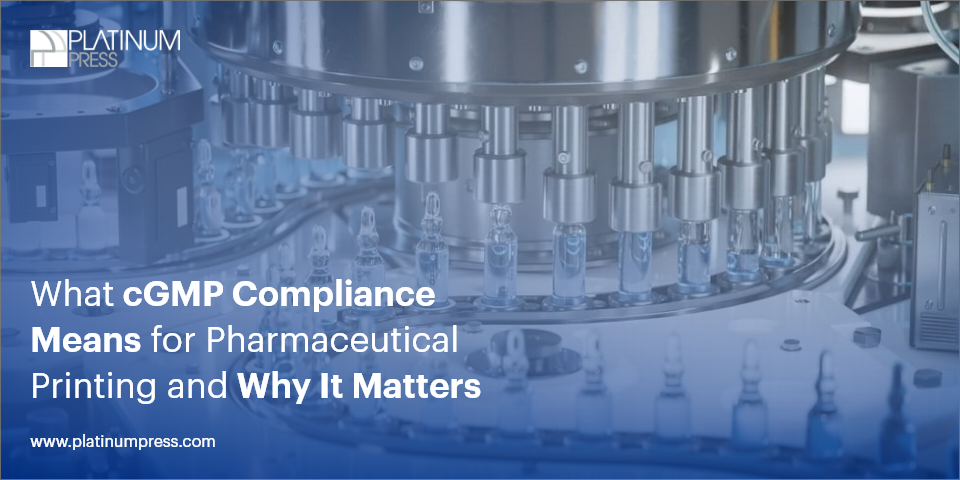
Current Good Manufacturing Practices, or cGMP, are FDA regulations designed to ensure that products are consistently produced and controlled according to quality standards. While cGMP is commonly associated with pharma manufacturing, it also applies to secondary printed packaging used in pharmaceutical products. 

For pharmaceutical printers, cGMP compliance means operating under controlled, documented, and auditable systems that govern every stage of production. This includes written procedures for artwork control, medical printing workflows, pharmaceutical labeling, inspection, reconciliation, change control, training, and corrective actions. 

Understanding what cGMP compliance is essential for any organization involved in pharmaceutical printing, as printed materials directly impact product identity, usage instructions, and regulatory approval. 

At Platinum Press, cGMP principles are embedded into daily operations to ensure printed packaging components meet approved specifications every time, supporting reliable pharma packaging solutions. 

How cGMP Applies to Labels, Inserts, and Cartons 

Errors in pharmaceutical printing can have serious consequences. Mislabeling, incorrect dosage information, barcode failures, or versioning mistakes can lead to regulatory findings, product recalls, or patient harm. 

cGMP compliant pharmaceutical printing operations implement multiple safeguards to prevent these risks. These safeguards include material verification, segregation of components, in process inspection, barcode verification, reconciliation of issued and returned pharmaceutical labeling, and documented final release procedures. 

By treating printed packaging as a regulated product, cGMP compliance ensures accuracy, traceability, and accountability throughout the medical printing process. This approach supports specialty pharmaceutical packaging programs that require tight control across multiple SKUs and product variations. 

How Platinum Press Applies cGMP Standards 

Platinum Press operates under cGMP compliant systems designed specifically for pharmaceutical printing. This includes documented standard operating procedures, controlled workflows, trained personnel, and continuous monitoring of quality metrics across pharmaceutical labeling and medical printing activities. 

Change control systems ensure that any changes to materials, processes, or equipment are reviewed and approved before implementation. Nonconformance and corrective action processes are in place to identify root causes and prevent recurrence. 

These systems support consistent quality across high volume runs, small batch production, and complex multi SKU programs. By aligning cGMP in pharmaceutical industry expectations with printing operations, Platinum Press supports compliant pharma packaging solutions without introducing unnecessary risk. 

Why cGMP Compliance Matters When Choosing a Printing Partner 

Pharmaceutical companies are responsible for the compliance of their entire supply chain. Working with a cGMP compliant pharmaceutical printing partner simplifies supplier qualification, audit readiness, and regulatory inspections. 

A cGMP focused printing partner demonstrates an understanding of regulatory expectations within the pharmaceutical industry and a commitment to protecting both brand reputation and patient safety. This is especially important when pharmaceutical labeling and medical printing components are reviewed during FDA inspections. 

For pharmaceutical companies seeking reliable, audit ready printing solutions, cGMP compliance is not optional. It is foundational to pharmaceutical compliance and long term supply chain confidence. 

Understanding 21 CFR Parts 210, 211, and Part 11 in Pharmaceutical Printing 

Pharmaceutical printing partners must operate within the same regulatory framework that governs pharma manufacturing and packaging oversight. This includes compliance with 21 CFR Parts 210 and 211, which establish the FDA’s requirements for Current Good Manufacturing Practices, as well as applicable aspects of 21 CFR Part 11. 

21 CFR Parts 210 and 211 

21 CFR Parts 210 and 211 define the minimum cGMP requirements for the manufacturing, processing, packaging, and holding of drug products. While these regulations are often associated with pharmaceutical production, they also apply to suppliers of secondary packaging components such as labels, inserts, and cartons. 

For pharmaceutical printing operations, Parts 210 and 211 require controlled processes, documented procedures, proper training, inspection, and reconciliation of printed materials, and full traceability. Labeling controls are particularly critical, as errors in pharmaceutical labeling can directly impact product identity and usage. 

Applicability of 21 CFR Part 11 

21 CFR Part 11 applies to electronic records and electronic signatures used in place of paper records required under cGMP regulations. In pharmaceutical printing, this includes systems supporting quality management, artwork approvals, proof approvals, training records, and audit documentation. 

Platinum Press applies Part 11 principles where electronic systems support cGMP activities, ensuring digital workflows maintain data integrity, traceability, and accountability across pharmaceutical compliance programs. 

Why These Regulations Matter 

Together, 21 CFR Parts 210, 211, and applicable elements of Part 11 ensure that pharmaceutical printing and pharmaceutical labeling are produced accurately, consistently, and under documented control. These regulations strengthen pharma packaging solutions and protect patient safety throughout the supply chain. 

Frequently Asked Questions 

1. What is cGMP compliance in pharmaceutical printing? 

cGMP compliance in pharmaceutical printing refers to operating under FDA regulated systems that control printing, inspection, documentation, and release of printed components. It ensures pharmaceutical labeling and medical printing materials meet approved specifications consistently and are audit ready. 

2. What is cGMP in pharma, and why does it apply to printers? 

cGMP in pharma extends beyond drug manufacturing to include suppliers that produce regulated components. Pharmaceutical printing partners must follow cGMP requirements because printed materials directly impact product identity, instructions, and regulatory compliance. 

3. How does pharmaceutical printing support pharmaceutical compliance? 

Pharmaceutical printing supports pharmaceutical compliance by ensuring labels, cartons, and inserts are accurate, traceable, and produced under controlled conditions. cGMP compliant medical printing reduces the risk of labeling errors and regulatory findings. 

4. Are pharmaceutical contract packaging and pharmaceutical printing the same? 

Pharmaceutical contract packaging typically involves assembly or kitting, while pharmaceutical printing focuses on producing regulated printed components. Both support pharma packaging solutions, but pharmaceutical printing requires specialized cGMP controls for labeling accuracy and documentation. 

5. How does cGMP impact sustainable pharmaceutical packaging efforts? 

While sustainability initiatives may exist, cGMP compliance ensures any sustainable pharmaceutical packaging materials or designs are evaluated, documented, and controlled to maintain pharmaceutical compliance and patient safety. 

what-is-pharmaceutical-packaging-complete-guide-for-healthcare-brands

Pharmaceutical packaging plays a critical role in ensuring patient safety, regulatory compliance, and product integrity. For healthcare brands, the packaging of pharmaceutical products is more than just a protective layer; it’s a system that supports dosage accuracy, branding, supply chain efficiency, and compliance with strict FDA standards.

In today’s highly regulated healthcare landscape, choosing the right pharmaceutical packaging design and solutions is essential for success. At Platinum Press, we specialize in delivering innovative and compliant pharmaceutical packaging that enables healthcare brands to meet both patient needs and regulatory expectations.

What Is Pharmaceutical Packaging?

Pharmaceutical packaging refers to the processes, materials, and designs used to encase, protect, and deliver medicines, medical devices, and healthcare products. It ensures that drugs remain safe, stable, and effective throughout their shelf life. From pharmaceutical blister packaging for tablets and capsules to pharmaceutical secondary packaging such as cartons, labels, and inserts, every element contributes to safety and usability.

Pharmaceutical packaging also includes design elements that provide essential product information, support branding, and improve patient adherence. Partnering with experienced pharmaceutical packaging companies, such as Platinum Press, helps healthcare organizations achieve compliance and market appeal.

Why Pharmaceutical Packaging Matters for Healthcare Brands

Healthcare packaging is more than a regulatory requirement; it has a direct impact on patient trust and brand reputation. Proper packaging of pharmaceutical products prevents contamination, ensures tamper resistance, provides clear labeling, and enhances supply chain logistics.

Additionally, pharmaceutical packaging design must strike a balance between functionality and aesthetics. Brands need packaging that not only meets FDA requirements but also communicates reliability, safety, and innovation to patients and healthcare providers. With the right pharmaceutical packaging solutions, healthcare brands can protect product integrity while supporting global market distribution.

Types of Pharmaceutical Packaging

Pharmaceutical packaging is generally categorized into three main types:

Primary Packaging

  • Directly contacts the drug (e.g., blister packs, bottles, vials).
  • Pharmaceutical blister packaging is one of the most common forms, as it provides unit-dose protection and enhances patient compliance.

Secondary Packaging

  • External packaging, such as cartons, labels, and leaflets.
  • Pharmaceutical secondary packaging provides essential regulatory and safety information.

Tertiary Packaging

  • Bulk packaging is used for shipping and distribution.
  • Supports storage efficiency and supply chain optimization.

For healthcare brands, working with pharmaceutical packaging suppliers ensures that each packaging level is optimized for both compliance and patient usability.

Pharmaceutical Packaging Design Considerations

Effective pharmaceutical packaging design must strike a balance between compliance, patient needs, and operational efficiency.

Healthcare packaging should: 

  • Ensure child resistance and tamper evidence.
  • Support clear readability with compliant labeling.
  • Enhance usability for elderly or disabled patients.
  • Align with sustainable materials and eco-friendly practices.

Custom pharmaceutical packaging also allows healthcare brands to tailor designs for product differentiation and patient engagement. At Platinum Press, we deliver custom pharmaceutical packaging that meets the unique needs of every healthcare client while ensuring compliance with international regulations.

Regulatory and Compliance Guidelines

Guideline Area Description Relevance for Healthcare Brands
General Guidelines for Packaging Focus on material safety, labeling accuracy, tamper resistance, and sustainability. Ensures the packaging of pharmaceutical products protects patients while meeting environmental goals.
Industry Guidelines U.S. FDA, EMA (Europe), and WHO recommendations set global benchmarks. Compliance is essential, making experienced pharmaceutical packaging companies critical partners for healthcare brands.
FDA Requirements Packaging must protect drug stability and sterility, provide tamper evidence, include accurate labeling, and meet child-resistance rules. Healthcare organizations rely on pharmaceutical packaging solutions and pharmaceutical packaging services to meet these requirements.

By partnering with Platinum Press, healthcare brands can access fully compliant pharmaceutical packaging design and custom pharmaceutical packaging solutions that simplify regulatory adherence while maintaining patient trust and confidence.

Role of Pharmaceutical Packaging Companies, Suppliers, and Services

Healthcare organizations depend on specialized pharmaceutical packaging companies to manage complexity. From sourcing compliant materials to providing end-to-end pharmaceutical packaging services, these companies ensure that every packaging layer aligns with safety, branding, and regulatory needs.

Pharmaceutical packaging suppliers play a key role in providing high-quality raw materials and components, while pharmaceutical packaging services include design, printing, kitting, and distribution. For healthcare brands, working with a provider like Platinum Press delivers integrated pharmaceutical packaging solutions that cover every stage of the process.

Innovative Pharmaceutical Packaging Solutions

As the healthcare industry evolves, so do packaging needs. Leading pharmaceutical packaging solutions focus on:

  • Smart packaging with QR codes and digital tracking.
  • Sustainable materials that meet eco-conscious demands.
  • Custom pharmaceutical packaging to improve brand identity and patient engagement.

Platinum Press combines technology, expertise, and regulatory knowledge to create future-ready healthcare packaging that enhances both compliance and market competitiveness.

FAQs

1. What is pharmaceutical packaging?

Pharmaceutical packaging is the system of materials, processes, and designs used to protect, store, and deliver medicines safely while meeting regulatory requirements.

2. What are the guidelines for packaging?

Guidelines cover labeling, child resistance, tamper evidence, material safety, and sustainability to ensure compliance and patient safety.

3. Which guidelines are used in the pharmaceutical industry?

The industry follows FDA, EMA, WHO, and ISO standards that govern the packaging of pharmaceutical products globally.

4. What are the FDA requirements for pharmaceutical packaging?

FDA requirements include protecting product stability, tamper resistance, accurate labeling, and child-proof packaging.

5. What is the ISO standard for pharmaceutical packaging?

ISO 15378 provides GMP standards for primary packaging materials, ensuring safety and consistency from pharmaceutical packaging suppliers.

It’s a Wrap!

For healthcare brands, choosing the right partner for pharmaceutical packaging solutions is crucial. With expertise in pharmaceutical packaging design, and pharmaceutical secondary packaging, Platinum Press provides end-to-end pharmaceutical packaging services that ensure compliance, quality, and innovation.

As one of the trusted pharmaceutical packaging companies, Platinum Press delivers scalable solutions for healthcare brands across the globe. Whether you need custom pharmaceutical packaging, regulatory-compliant labeling, or advanced healthcare packaging, our team ensures your products are safe, compliant, and market-ready.

Platinum Press is your partner in healthcare packaging innovation.