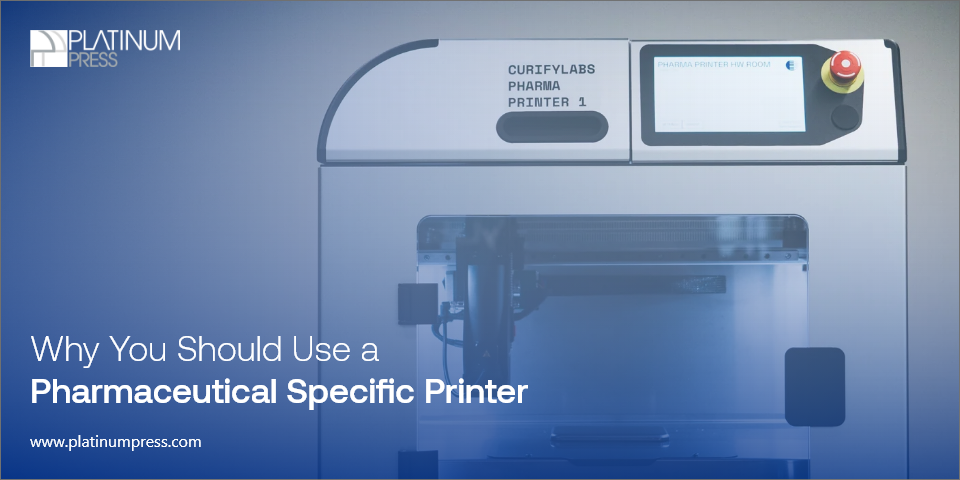
Why You Should Use a Pharmaceutical-Specific Printer?
Not every printer is built for pharmaceutical work. Many commercial and Consumer Packaged Goods (CPG) printers can produce attractive packaging. But pharmaceutical printing operates under a different level of scrutiny, documentation, and risk. In this environment, printing is not just about appearance. It is about compliance, control, and patient safety.
Choosing a pharmaceutical-specific printer is a risk management decision, particularly when considering the importance of pharmaceutical label printing in maintaining regulatory compliance.
Pharmaceutical Packaging Is a Regulated Component
In pharma printing, labels, cartons, and inserts are not marketing materials. They are regulated components of the drug product.
If the printed information is wrong, incomplete, or inconsistent, the impact is serious. A labeling error can delay product release, trigger a recall, or raise regulatory concerns.
A pharmaceutical printer understands that every printed component must meet approved specifications and be traceable back to documented processes. These printers work within strict regulatory frameworks and produce packaging that passes rigorous audits. This is why the choice of pharmaceutical label printers matters. In this context, biomedical labels must also be produced with equal precision and accuracy.
The Difference Between Pharma Printers and CPG Printers
A Consumer Packaged Goods (CPG) printer is typically optimized for speed, cost efficiency, and visual appeal. Those priorities make sense in consumer markets. But pharmaceutical printing demands something different.
Pharmaceutical-specific printers operate within controlled quality systems. Production is documented. Changeovers are managed carefully. Materials are segregated. Artwork is controlled. Inspections are structured.
This level of discipline is not standard in general commercial printing. For pharmacy label printer suppliers, these controlled systems are essential for ensuring that regulatory standards are met with every run. Even high speed label printers used in these settings must follow strict compliance processes to maintain consistent color, labeling, and accuracy across large-scale production runs.
Process Controls Designed to Prevent Risk
Pharmaceutical environments involve multiple SKUs, frequent artwork revisions, and similar-looking packaging across strengths or formulations. Without strict controls, the risk of mix-ups increases.
Pharmaceutical printers implement formal line clearance procedures, independent quality approval before production starts, and clear material segregation throughout the facility. These steps help mitigate risks associated with pharmaceutical label printing and ensure accurate product labeling. In pharmaceutical labeling companies, these checks are standard practices to ensure packaging safety and compliance.
Inspection That Goes Beyond Sampling
In commercial printing, sampling may be sufficient. In pharma printing, it is not.
Pharmaceutical printers rely on structured inspection systems during both printing and finishing. This helps ensure that defects are identified immediately and that nonconforming material does not move downstream.
Accuracy is monitored throughout the run, not just at the beginning or end. This label printing system provides the highest level of scrutiny, helping prevent costly errors and ensuring compliance across every batch. High speed label printers need to ensure that accuracy and consistency are maintained even during rapid production cycles.
Documentation That Supports Audits
Pharmaceutical companies are routinely audited by regulatory bodies. Their suppliers are part of that audit trail.
A pharmaceutical-specific printer maintains controlled documentation, including job records, inspection logs, and certificates of conformance or compliance. These records provide traceability and demonstrate that packaging components were produced under controlled conditions.
A general Consumer Packaged Goods (CPG) printer may not be structured to support this level of audit readiness, and could risk non-compliance if used for pharmaceutical label printing. Similarly, medical device label printer systems must also comply with the same rigorous documentation standards to avoid errors.
Experience in Regulated Environments Matters
There is a difference between being able to print pharmaceutical packaging and being built for it. A pharmaceutical specific printer understands regulatory language, audit expectations, and the consequences of small errors. The systems are designed with that reality in mind.
You do not want your printer learning pharmaceutical compliance on your product. This is why working with an experienced pharmaceutical printer is essential for your brand’s safety and compliance. Companies like pharmaceutical labeling companies help ensure that all regulatory requirements are met without issue.
The Platinum Press Approach
At Platinum Press, pharmaceutical printing is not a division of commercial printing. It is the foundation of how we operate.
Our processes are structured around cGMP principles. We maintain documented quality systems, perform formal line clearance with quality approval, apply 100 percent vision inspection across printing and finishing, and issue certificates of conformance to support traceability.
This level of control is what differentiates a pharmaceutical-specific printer from the average Consumer Packaged Goods (CPG) printer.
In regulated packaging, precision is not a preference. It is a requirement. Our pharmacy printers ensure that every label, carton, and insert is produced with the utmost care and compliance to regulatory standards.
Frequently Asked Questions
1. What is a pharmaceutical label printer?
A pharmaceutical label printer specializes in producing packaging that meets strict regulatory requirements for the pharmaceutical industry. These printers ensure that all labels and packaging are produced under controlled processes that meet pharmaceutical printing standards.
2. Why should I choose a pharmaceutical-specific printer over a CPG printer?
Pharmaceutical-specific printers adhere to strict regulatory standards and quality systems, ensuring compliance in pharma printing. They manage line clearance, material segregation, and inspections to prevent cross-contamination and ensure accuracy in pharmaceutical label printing.
3. How does a pharmaceutical label printing process differ from commercial printing?
In pharmaceutical label printing, every component must meet regulated standards. Unlike commercial printing, pharmaceutical printers must ensure every label, carton, and insert is traceable, compliant, and accurate, with extensive documentation and inspection throughout production.
4. What is the role of pharmacy label printer systems in compliance?
Pharmacy label printers use controlled systems for artwork approval, material handling, and inspections to ensure that every printed item meets strict regulatory standards, minimizing risk and ensuring patient safety in pharmaceutical printing.
5. Why is documentation so important for pharmaceutical printers?
Documentation in pharmaceutical printing supports audit readiness, traceability, and compliance with regulatory agencies. Pharmaceutical printers maintain records such as inspection logs, job records, and certificates of compliance to prove that all packaging components meet required standards.