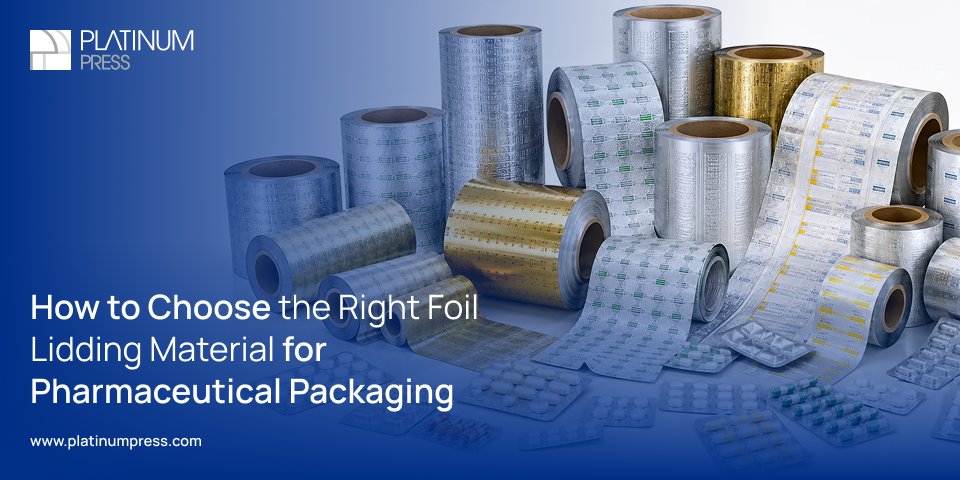
How to Choose the Right Foil Lidding Material for Pharmaceutical Packaging
Foil lidding plays a critical role in protecting pharmaceutical products. Whether used for unit dose packaging, diagnostic kits, medical devices, or healthcare products, the lidding material must do far more than seal the package.
It must protect product integrity, maintain barrier performance, support manufacturing efficiency, and meet regulatory requirements throughout the product’s lifecycle.
When manufacturers ask what materials are used in blister packaging, the answer often depends on the product’s sensitivity, storage requirements, and distribution environment. However, aluminum foil continues to be one of the most trusted choices because of its superior protective properties and compatibility with modern pharma packaging applications.
From foil blister packaging for prescription medications to pharmaceutical blister packs used in hospitals and retail pharmacies, selecting the appropriate lidding material helps preserve product quality while supporting compliance. At Platinum Press, our Pharmaceutical Printing Solutions, Custom Product Packaging Solutions, and Custom Packaging Solutions help pharmaceutical manufacturers develop reliable packaging systems that protect products throughout their lifecycle.
Why Foil Lidding Is Used?
Aluminum foil has become one of the most widely used lidding materials in pharmaceutical blister packaging because it offers an outstanding combination of protection, durability, barrier performance, and printability.
Today, foil blister packaging is commonly used for:
- Unit dose pharmaceutical packaging
- Medical device trays
- Diagnostic products
- Healthcare products
- OTC packaging
Its primary purpose is to create a secure barrier that protects the product until the moment of use. Unlike many other materials, aluminum blister packaging provides excellent resistance against environmental factors that can affect sensitive medications. This makes it an ideal solution for products that require long shelf lives or controlled storage conditions.
Manufacturers exploring types of blister packaging often compare aluminum foil with polymer-based alternatives. While different materials offer unique benefits, foil remains a preferred choice whenever maximum product protection is required.
As blister packaging in the pharmaceutical industry continues to evolve, aluminum foil remains a key component because it supports both patient safety and manufacturing efficiency. Understanding what materials are used in blister packaging helps manufacturers select the right combination of materials for each specific product application.
Barrier Properties Matter
One of the greatest advantages of aluminum foil is its exceptional barrier performance. Unlike many other packaging materials, foil lidding material provides an excellent barrier against:
- Moisture
- Oxygen
- Light
- Water vapor
- Environmental contaminants
These protective characteristics help preserve product stability throughout storage and distribution while supporting shelf-life requirements established during pharmaceutical development.
For moisture-sensitive medications, barrier performance is often the primary reason manufacturers choose aluminum blister packaging over other packaging options. Even slight exposure to moisture or oxygen can reduce the effectiveness of certain medications, making reliable barrier protection essential.
Within modern blister packaging in the pharmaceutical industry, barrier performance is one of the most important factors evaluated during package development. Manufacturers routinely consider product sensitivity, climate conditions, shipping environments, and expected shelf life before selecting materials.
When evaluating types of blister packaging, it is important to understand that not every solution offers the same level of protection. For products requiring the highest barrier performance, aluminum foil continues to be one of the most dependable materials available.
Seal Performance Is Critical
The foil itself is only one part of a successful packaging system. The seal between the foil lidding material and the container is equally important because even the highest-quality material cannot protect a product if the seal fails. Depending on the application, manufacturers may require:
- Peelable seals
- Permanent seals
- Easy-open designs
- Tamper-evident performance
Selecting the appropriate seal construction depends on the product, container material, intended user, and regulatory expectations. A poorly designed seal can compromise package integrity even when the aluminum blister packaging performs exactly as intended.
As companies compare different types of blister packaging, they often find that seal performance directly influences patient experience as well as product protection. Easy-open designs may improve accessibility, while stronger permanent seals provide greater security for specific healthcare products.
Consider the End User
The people opening pharmaceutical packaging vary widely. Packaging may be opened by:
- Patients
- Pharmacists
- Nurses
- Physicians
- Caregivers
Each group has different needs and expectations, making user experience an important consideration during pharmaceutical blister packaging development. The selected foil lidding material should provide the right balance between package security and ease of opening. A seal that is too difficult to peel may frustrate elderly patients or caregivers, while one that opens too easily may compromise product protection or tamper evidence.
Understanding the end user helps determine the most appropriate solution for pharmaceutical blister packs, particularly when products are intended for long-term therapies or home healthcare.
Whether designing foil blister packaging for prescription medications or evaluating new types of blister packaging, considering patient usability alongside regulatory compliance results in stronger packaging decisions.
Printing Performance Is Just as Important
For pharmaceutical products, foil lidding material serves as more than a protective seal—it is also a critical communication tool. Every package must clearly present essential information, including:
- Product identification
- Directions for use
- Lot numbers
- Expiration dates
- Regulatory information
- Barcodes
Because this information directly affects patient safety and product traceability, selecting materials that support high-quality printing is just as important as choosing materials with excellent barrier properties.
High-resolution printing ensures that text, graphics, and variable information remain sharp and legible throughout the product’s lifecycle. This is particularly important in pharmaceutical blister packaging, where limited space requires information to be printed clearly without sacrificing readability.
Whether producing foil blister packaging or pharmaceutical blister packs, manufacturers benefit from printing technologies that consistently reproduce fine text and complex graphics.
At Platinum Press, our Pharmaceutical Printing Solutions are designed specifically for regulated healthcare applications. Combined with our Custom Packaging Solutions, we help manufacturers produce foil blister packaging that communicates critical information with exceptional clarity while maintaining the quality expected throughout modern blister packaging in the pharmaceutical industry.
Variable Data Requirements
Most pharmaceutical foil lidding material includes variable information added during production.
This information may include:
- Lot numbers
- Expiration dates
- Serialization data
- Production codes
When selecting materials, manufacturers should ensure compatibility with their coding technology to maintain readability and traceability throughout production.
Different packaging environments commonly utilize:
- Inkjet
- Thermal transfer
- Laser marking
- Ablation technologies
Choosing the appropriate foil lidding material helps ensure these marking methods perform consistently without smudging, fading, or affecting package appearance. As manufacturers evaluate what materials are used in blister packaging, they should consider not only barrier protection but also how the material performs during coding and serialization processes.
Reliable variable data printing has become an essential component of pharmaceutical blister packaging, supporting product authentication, inventory control, and regulatory compliance across global supply chains.
Precision Conversion Matters
Printing is only one stage of producing high-quality pharmaceutical blister packs. After printing, the foil lidding material must be converted into its final shape with precise registration and dimensional accuracy. Poor alignment between printed graphics and die-cut components can affect package appearance, usability, sealing performance, and automated packaging operations.
For this reason, precision converting is an important part of producing reliable foil blister packaging. At Platinum Press, printed foil is converted into finished lidding components using dedicated finishing equipment designed specifically for pharmaceutical blister packaging applications. This controlled manufacturing process helps ensure graphics, sealing areas, registration marks, and finished dimensions remain consistently aligned throughout production.
By combining advanced converting capabilities with Pharmaceutical Printing Solutions, Custom and Custom Product Packaging Solutions, we help manufacturers maintain quality across demanding pharma packaging environments.
Supporting Compliance
Because foil lidding material forms part of the primary packaging system, selecting the right material also supports regulatory compliance. Manufacturers should evaluate several important factors, including:
- Material compatibility
- Supplier qualification
- Documentation availability
- Traceability
- Product-specific performance requirements
Within today’s blister packaging in the pharmaceutical industry, compliance extends far beyond selecting durable materials. Every component must contribute to product protection, accurate labeling, and manufacturing consistency.
Understanding what materials are used in blister packaging allows manufacturers to choose solutions that meet both operational and regulatory expectations while protecting sensitive pharmaceutical products.
Sustainability Considerations
Sustainability continues to influence decisions across the pharma packaging industry. Although product protection remains the highest priority, manufacturers are increasingly evaluating opportunities to reduce waste while improving manufacturing efficiency. Choosing the appropriate foil lidding material can contribute to:
- Material optimization
- Reduced packaging waste
- Improved manufacturing efficiency
- More sustainable packaging operations
Different types of blister packaging offer varying opportunities for material optimization depending on product requirements and packaging design. Balancing sustainability with performance is especially important in pharmaceutical blister packaging, where product safety can never be compromised. Manufacturers continue exploring innovative solutions that improve environmental performance while maintaining the barrier protection expected from high-quality aluminum blister packaging.
Selecting the Right Packaging Partner
Whether developing pharmaceutical blister packs, evaluating types of blister packaging, or selecting foil blister packaging for a new product launch, working with knowledgeable specialists reduces risk throughout package development.
Organizations that provide complete Pharmaceutical Printing Solutions, Custom Product Packaging Solutions, and Custom Packaging Solutions can support manufacturers from concept through production while maintaining the consistency required for regulated healthcare environments.
The Platinum Press Difference
At Platinum Press, we manufacture foil lidding material exclusively for healthcare and pharmaceutical applications. Our controlled printing, precision converting, and pharmaceutical-focused manufacturing processes help ensure every component delivers the barrier protection, print quality, dimensional accuracy, and consistency required for regulated packaging environments.
From high-resolution printing to precision conversion into finished pharmaceutical blister packs, every stage of production is designed to protect products while supporting manufacturers with dependable Pharmaceutical Printing Solutions.
Our expertise in foil blister packaging, aluminum blister packaging, and advanced Custom Product Packaging Solutions enables customers to develop packaging systems that perform reliably throughout the product lifecycle.
As blister packaging in the pharmaceutical industry continues to evolve, manufacturers need partners who understand both regulatory expectations and production realities. At Platinum Press, our Custom Packaging Solutions help pharmaceutical companies create high-quality pharma packaging that protects products, supports compliance, and enhances operational efficiency. Choosing the right foil lidding material isn’t simply about sealing a package, it’s about protecting everything inside it.
Frequently Asked Questions
Why is foil lidding material used in pharmaceutical blister packaging?
Foil lidding material provides excellent protection against moisture, oxygen, light, and contaminants, helping maintain product stability, shelf life, and regulatory compliance in pharmaceutical packaging.
What materials are used in blister packaging?
Common blister packaging materials include aluminum foil, PVC, PET, and specialty films. The right choice depends on product sensitivity, barrier requirements, and packaging performance.
What are the benefits of aluminum blister packaging?
Aluminum blister packaging offers outstanding barrier protection, excellent printability, durability, and compatibility with pharmaceutical manufacturing, making it ideal for sensitive healthcare products.
Why is printing quality important on pharmaceutical blister packs?
Clear printing ensures product identification, dosage instructions, lot numbers, expiration dates, and regulatory information remain accurate, readable, and traceable throughout the product lifecycle.
How do manufacturers choose the best foil lidding material?
Manufacturers evaluate barrier performance, seal compatibility, print quality, regulatory requirements, production equipment, sustainability goals, and end-user needs before selecting a foil lidding material.
How does Platinum Press support pharmaceutical packaging?
Platinum Press provides advanced Pharmaceutical Printing Solutions, Custom Product Packaging Solutions, and Custom Packaging Solutions for reliable pharmaceutical blister packaging and foil lidding applications.