Inline Vision Inspection and Why 100 Percent Inspection Is Critical in Pharmaceutical Printing
In pharmaceutical packaging, accuracy is not negotiable. Printed components such as labels, cartons, and literature carry regulated information that directly impacts product identity, dosing, and patient safety. Even minor defects can lead to serious regulatory consequences, including recalls and shipment delays.
Inline vision inspection plays a critical role in preventing these risks. This article explains what inline vision inspection is, why 100% inspection is essential in pharmaceutical printing, and how Platinum Press applies vision inspection across printing and finishing operations to ensure consistent, compliant results.
What Is Inline Vision Inspection?
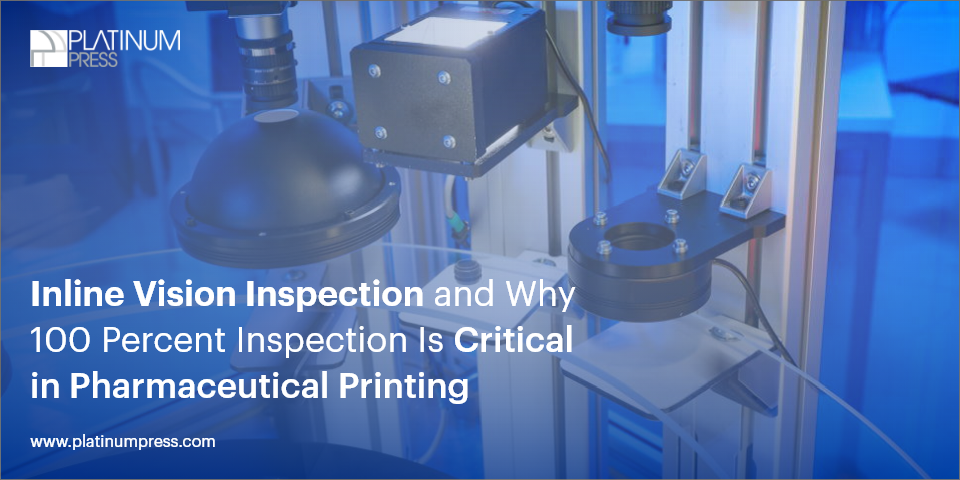
Inline vision inspection is an automated quality control system that uses high-resolution cameras and software to inspect printed materials in real time as they move through production. Unlike sampling inspection, inline vision inspection systems evaluate 100 percent of the units produced against approved standards, ensuring comprehensive packaging quality control.
These systems are designed to detect defects such as missing or incorrect text, color variation, registration errors, barcode issues, print defects, and finishing errors. When a deviation is detected, the system can alert operators or automatically remove nonconforming material from the production stream.
Inline vision inspection is particularly important in pharmaceutical printing, where errors may not be visible to the human eye or may occur intermittently at high speeds. By integrating print inspection systems, Platinum Press ensures that every printed component meets pharmaceutical packaging requirements and cGMP standards.
Why 100 Percent Vision Inspection Matters in Pharma?
Pharmaceutical regulations require that labeling and packaging components be produced accurately and consistently. Relying solely on manual inspection or sampling inspection introduces risk, especially for high-volume runs or complex artwork. A 100 percent vision inspection system ensures that every label, carton, and piece of printed literature is checked against approved specifications.
This reduces the risk of undetected defects entering the supply chain and provides greater confidence during audits and regulatory inspections. Vision inspection also supports traceability and documentation, both of which are essential components of cGMP-compliant operations.
By using 100% inspection throughout production, pharmaceutical companies can ensure that their packaging meets the highest standards for accuracy, legibility, and compliance.
Vision Inspection Across Printing Operations
At Platinum Press, inline vision inspection is integrated directly into printing workflows. As materials are printed, vision systems continuously monitor key attributes such as content accuracy, color consistency, registration, and barcode readability.
By inspecting every printed unit during production, potential issues are identified immediately rather than after a run is complete. This allows for corrective action to be taken quickly, minimizing waste and preventing nonconforming material from progressing downstream.
This approach supports consistent quality across labels, cartons, and printed literature, regardless of run size or complexity. Printing inspection systems help guarantee that every unit meets regulatory requirements and is fully compliant with pharmaceutical packaging standards.
Vision Inspection in Finishing and Conversion
Vision inspection does not stop at printing. The finishing and conversion stages introduce additional risk if not properly controlled. Cutting, folding, gluing, and other finishing processes can create defects that impact usability or compliance.
Platinum Press applies vision inspection during finishing operations to ensure that printed components remain compliant through final conversion. This includes vision inspection on label finishing equipment and within carton folder gluer operations, where systems verify correct construction, alignment, and integrity.
By extending vision inspection into finishing, Platinum Press provides full process coverage from print through the final packaged component. This ensures that pharmaceutical packaging remains compliant with cGMP standards all the way to the finished product.
Benefits of Inline Vision Inspection for Pharmaceutical Companies
Inline 100 percent vision inspection offers several key benefits for pharmaceutical companies. It reduces the likelihood of recalls by identifying defects before products leave the facility. It improves audit readiness by demonstrating robust, automated quality controls. It also supports faster root cause analysis by providing detailed inspection data.
Most importantly, it helps ensure that patients receive products with accurate, legible, and compliant packaging every time.
A quality first approach to pharmaceutical printing ensures that inline vision inspection is not an add-on feature. It is a core component of a modern pharmaceutical printing quality system. By implementing 100 percent vision inspection across both printing and finishing processes, Platinum Press reinforces its commitment to accuracy, consistency, and regulatory compliance.
Partnering With Platinum Press for Vision Inspection in Pharmaceutical Printing
Platinum Press combines advanced press technology with years of pharmaceutical printing expertise. Inline vision inspection on our presses is one of several key finishing capabilities available to support compliant, high-quality pharmaceutical packaging solutions.
With experience across labels, cartons, printed literature, and combination products, Platinum Press helps pharmaceutical brands integrate 100 percent vision inspection in a way that enhances design while maintaining accuracy, consistency, and compliance. Whether for small batch runs or complex multi-SKU programs, Platinum Press is your partner in delivering pharma packaging solutions that are both innovative and compliant.
Frequently Asked Questions
1. What is inline vision inspection in pharmaceutical printing?
Inline vision inspection is a quality control process that uses high-resolution cameras and software to check every printed component for defects in real time. It ensures that all printed materials meet pharmaceutical packaging standards and 100% inspection criteria.
2. Why is 100 percent inspection important in pharmaceutical packaging?
100 percent inspection ensures that every label, carton, and piece of printed literature is checked against approved specifications. This reduces the risk of defects entering the supply chain and supports audit readiness in pharmaceutical packaging.
3. How does vision inspection support pharmaceutical labeling?
Vision inspection in pharmaceutical labeling ensures that all printed information, including dosage, product names, and barcodes, meets cGMP compliance. It helps identify errors such as incorrect text, missing elements, or color variations that could compromise patient safety.
4. Can print inspection systems detect all types of printing errors?
Yes, print inspection systems are designed to detect a wide range of errors, including missing text, registration issues, color discrepancies, and barcode problems. These systems provide real-time feedback and prevent nonconforming materials from progressing through the production process.
5. How do pharma packaging companies benefit from 100% inspection?
Pharma packaging companies benefit from 100% inspection by reducing the likelihood of regulatory findings, recalls, and product errors. It ensures that all packaging components, including labels and cartons, are compliant with pharmaceutical standards.
6. What are the benefits of implementing vision inspection in pharmaceutical finishing processes?
Implementing vision inspection during finishing processes helps verify that the printed components maintain compliance through cutting, folding, and gluing stages. It ensures that the final pharmaceutical packaging meets all regulatory standards and patient safety requirements.