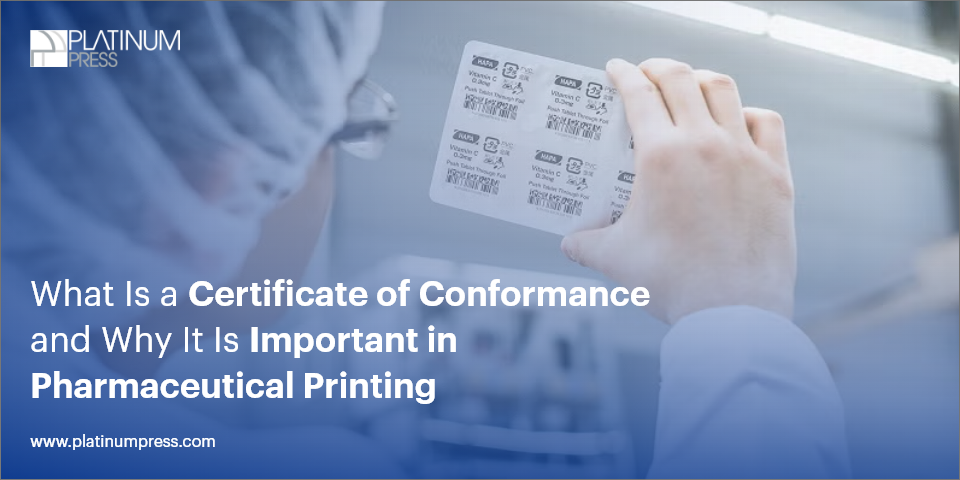
What Is a Certificate of Conformance and Why Is It Important in Pharmaceutical Printing
In pharmaceutical packaging, documentation is just as critical as the printed components themselves. Labels, cartons, and printed literature must meet approved specifications, and pharmaceutical companies must be able to prove that they do. This is where a certificate of conformance plays an essential role.
This article explains what is a certificate of conformance, why it matters in pharmaceutical printing, and how it supports regulatory compliance, quality assurance, and audit readiness.
What Is a Certificate of Conformance
A certificate of conformance is a formal document issued by a supplier stating that the products delivered meet all agreed-upon specifications, regulatory requirements, and quality standards. In pharmaceutical printing, this typically includes confirmation that labels, cartons, or literature were produced in accordance with approved artwork, materials, processes, and quality controls.
A certificate of conformance ensures that the finished printed components meet quality of conformance standards, confirming that they are compliant with all regulatory guidelines. This certificate plays a crucial role in maintaining process conformance, especially in pharmaceutical packaging design, where precise labeling and documentation are critical.
What Information Is Included in a Certificate of Conformance
A certificate of conformance generally includes key details such as product identification, job or batch numbers, quantity, revision or artwork version, and confirmation that production followed approved specifications.
It may also reference applicable quality systems, inspection results, and compliance with cGMP requirements. This documentation provides traceability and serves as a formal quality release statement from the printer. By offering this documentation, the printing company demonstrates that pharmaceutical packaging design is fully compliant with regulatory requirements.
Why Certificates Matter in Pharmaceutical Printing
Pharmaceutical packaging components are regulated items. Errors in labeling or packaging can lead to serious consequences, including recalls, regulatory findings, and risks to patient safety.
A certificate of conformance provides assurance that quality controls were followed throughout production and that the finished components meet requirements before they enter the pharmaceutical packaging supply chain. It supports internal quality reviews and helps pharmaceutical companies demonstrate supplier compliance during audits and inspections.
Certificates also create accountability. By formally attesting to conformance, the printing partner accepts responsibility for meeting specifications. A reliable pharma packaging company consistently issues accurate certificates of conformance, showcasing its commitment to quality and compliance.
Certificates of Conformance and Regulatory Expectations
Regulatory agencies expect pharmaceutical companies to maintain complete documentation for all components used in drug products, including printed packaging. Certificates of conformance support this expectation by providing evidence that suppliers operate under controlled, compliant systems.
During audits, certificates of conformance are often reviewed alongside batch records, artwork approvals, and inspection reports. Having clear, accurate certificates simplifies audits and reduces the need for additional documentation requests. This ensures that the pharmaceutical company remains audit ready and compliant.
How Certificates Support Traceability and Risk Management
Certificates of conformance help link finished printed components back to specific production runs, materials, and inspection activities. This traceability is critical for investigations, change management, and corrective actions if issues arise.
In the event of a complaint or deviation, certificates of conformance provide a documented starting point for root cause analysis. They also help ensure that only approved, conforming materials are released for use. Having these certificates readily available supports quality of conformance and process conformance.
Certificates of Conformance at Platinum Press
Platinum Press provides certificates of conformance as part of its commitment to quality and regulatory support in pharmaceutical printing. Certificates of conformance are issued based on controlled production processes, documented inspections, and adherence to approved specifications.
By integrating certificates of conformance into its cGMP and ISO 9001:2015-aligned quality systems, Platinum Press helps pharmaceutical clients maintain compliance, traceability, and confidence in their printed packaging supply chain. Whether for labels, cartons, or printed literature, Platinum Press ensures all printed materials are in conformance with pharmaceutical packaging design specifications.
Why Certificates of Conformance Matter When Choosing a Printing Partner
Not all printers provide the same level of documentation or quality assurance. A pharmaceutical printing partner that consistently issues accurate certificates of conformance demonstrates a strong quality culture and an understanding of regulatory expectations.
For pharmaceutical companies, certificates of compliance are not just paperwork. They are a critical link between printed packaging components and the regulatory obligations that protect patients and brands. Working with a reliable pharma packaging company that prioritizes certificate of conformance issuance ensures that packaging meets both quality of conformance and process conformance standards.
Frequently Asked Questions
1. What is a certificate of conformance in pharmaceutical printing?
A certificate of conformance is a formal document issued by a supplier confirming that their products meet all agreed-upon specifications and cGMP standards. In pharmaceutical printing, this includes ensuring the pharmaceutical packaging design and materials adhere to regulatory and quality control requirements.
2. What information is included in a certificate of conformance?
A certificate of conformance typically includes product identification, job or batch numbers, quantity, artwork version, and confirmation of conformance to pharmaceutical packaging design and cGMP requirements. It also documents inspection results and quality system compliance.
3. Why do certificates of conformance matter in pharmaceutical packaging?
Certificates of conformance are essential for regulatory compliance and audit readiness. They assure that pharmaceutical packaging, such as labels and cartons, meets the agreed specifications, supporting traceability, quality control, and compliance during audits and inspections.
4. How does certification printing support pharmaceutical compliance?
Certification printing ensures that all printed components are produced according to approved processes and specifications, meeting regulatory requirements. It provides pharmaceutical companies with the necessary documentation to demonstrate process conformance and audit readiness.
5. What is the role of pharmaceutical packaging design in a certificate of conformance?
Pharmaceutical packaging design is critical in ensuring printed materials meet regulatory requirements. A certificate of conformance confirms that pharmaceutical packaging design adheres to quality of conformance and cGMP standards throughout production.
6. How does traceability support pharmaceutical compliance?
Traceability is essential in pharmaceutical printing. Certificates of conformance link finished printed components back to specific production runs, ensuring quality of conformance and providing a documented starting point for corrective actions and root cause analysis in case of deviations.