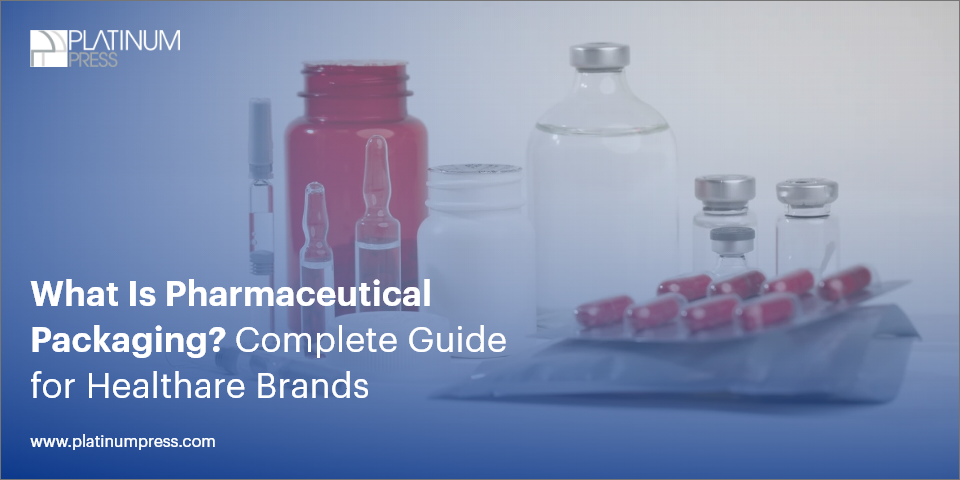
What Is Pharmaceutical Packaging? Complete Guide for Healthcare Brands
Pharmaceutical packaging plays a critical role in ensuring patient safety, regulatory compliance, and product integrity. For healthcare brands, the packaging of pharmaceutical products is more than just a protective layer; it’s a system that supports dosage accuracy, branding, supply chain efficiency, and compliance with strict FDA standards.
In today’s highly regulated healthcare landscape, choosing the right pharmaceutical packaging design and solutions is essential for success. At Platinum Press, we specialize in delivering innovative and compliant pharmaceutical packaging that enables healthcare brands to meet both patient needs and regulatory expectations.
What Is Pharmaceutical Packaging?
Pharmaceutical packaging refers to the processes, materials, and designs used to encase, protect, and deliver medicines, medical devices, and healthcare products. It ensures that drugs remain safe, stable, and effective throughout their shelf life. From pharmaceutical blister packaging for tablets and capsules to pharmaceutical secondary packaging such as cartons, labels, and inserts, every element contributes to safety and usability.
Pharmaceutical packaging also includes design elements that provide essential product information, support branding, and improve patient adherence. Partnering with experienced pharmaceutical packaging companies, such as Platinum Press, helps healthcare organizations achieve compliance and market appeal.
Why Pharmaceutical Packaging Matters for Healthcare Brands
Healthcare packaging is more than a regulatory requirement; it has a direct impact on patient trust and brand reputation. Proper packaging of pharmaceutical products prevents contamination, ensures tamper resistance, provides clear labeling, and enhances supply chain logistics.
Additionally, pharmaceutical packaging design must strike a balance between functionality and aesthetics. Brands need packaging that not only meets FDA requirements but also communicates reliability, safety, and innovation to patients and healthcare providers. With the right pharmaceutical packaging solutions, healthcare brands can protect product integrity while supporting global market distribution.
Types of Pharmaceutical Packaging
Pharmaceutical packaging is generally categorized into three main types:
Primary Packaging
- Directly contacts the drug (e.g., blister packs, bottles, vials).
- Pharmaceutical blister packaging is one of the most common forms, as it provides unit-dose protection and enhances patient compliance.
Secondary Packaging
- External packaging, such as cartons, labels, and leaflets.
- Pharmaceutical secondary packaging provides essential regulatory and safety information.
Tertiary Packaging
- Bulk packaging is used for shipping and distribution.
- Supports storage efficiency and supply chain optimization.
For healthcare brands, working with pharmaceutical packaging suppliers ensures that each packaging level is optimized for both compliance and patient usability.
Pharmaceutical Packaging Design Considerations
Effective pharmaceutical packaging design must strike a balance between compliance, patient needs, and operational efficiency.
Healthcare packaging should:
- Ensure child resistance and tamper evidence.
- Support clear readability with compliant labeling.
- Enhance usability for elderly or disabled patients.
- Align with sustainable materials and eco-friendly practices.
Custom pharmaceutical packaging also allows healthcare brands to tailor designs for product differentiation and patient engagement. At Platinum Press, we deliver custom pharmaceutical packaging that meets the unique needs of every healthcare client while ensuring compliance with international regulations.
Regulatory and Compliance Guidelines
| Guideline Area | Description | Relevance for Healthcare Brands |
| General Guidelines for Packaging | Focus on material safety, labeling accuracy, tamper resistance, and sustainability. | Ensures the packaging of pharmaceutical products protects patients while meeting environmental goals. |
| Industry Guidelines | U.S. FDA, EMA (Europe), and WHO recommendations set global benchmarks. | Compliance is essential, making experienced pharmaceutical packaging companies critical partners for healthcare brands. |
| FDA Requirements | Packaging must protect drug stability and sterility, provide tamper evidence, include accurate labeling, and meet child-resistance rules. | Healthcare organizations rely on pharmaceutical packaging solutions and pharmaceutical packaging services to meet these requirements. |
By partnering with Platinum Press, healthcare brands can access fully compliant pharmaceutical packaging design and custom pharmaceutical packaging solutions that simplify regulatory adherence while maintaining patient trust and confidence.
Role of Pharmaceutical Packaging Companies, Suppliers, and Services
Healthcare organizations depend on specialized pharmaceutical packaging companies to manage complexity. From sourcing compliant materials to providing end-to-end pharmaceutical packaging services, these companies ensure that every packaging layer aligns with safety, branding, and regulatory needs.
Pharmaceutical packaging suppliers play a key role in providing high-quality raw materials and components, while pharmaceutical packaging services include design, printing, kitting, and distribution. For healthcare brands, working with a provider like Platinum Press delivers integrated pharmaceutical packaging solutions that cover every stage of the process.
Innovative Pharmaceutical Packaging Solutions
As the healthcare industry evolves, so do packaging needs. Leading pharmaceutical packaging solutions focus on:
- Smart packaging with QR codes and digital tracking.
- Sustainable materials that meet eco-conscious demands.
- Custom pharmaceutical packaging to improve brand identity and patient engagement.
Platinum Press combines technology, expertise, and regulatory knowledge to create future-ready healthcare packaging that enhances both compliance and market competitiveness.
FAQs
1. What is pharmaceutical packaging?
Pharmaceutical packaging is the system of materials, processes, and designs used to protect, store, and deliver medicines safely while meeting regulatory requirements.
2. What are the guidelines for packaging?
Guidelines cover labeling, child resistance, tamper evidence, material safety, and sustainability to ensure compliance and patient safety.
3. Which guidelines are used in the pharmaceutical industry?
The industry follows FDA, EMA, WHO, and ISO standards that govern the packaging of pharmaceutical products globally.
4. What are the FDA requirements for pharmaceutical packaging?
FDA requirements include protecting product stability, tamper resistance, accurate labeling, and child-proof packaging.
5. What is the ISO standard for pharmaceutical packaging?
ISO 15378 provides GMP standards for primary packaging materials, ensuring safety and consistency from pharmaceutical packaging suppliers.
It’s a Wrap!
For healthcare brands, choosing the right partner for pharmaceutical packaging solutions is crucial. With expertise in pharmaceutical packaging design, and pharmaceutical secondary packaging, Platinum Press provides end-to-end pharmaceutical packaging services that ensure compliance, quality, and innovation.
As one of the trusted pharmaceutical packaging companies, Platinum Press delivers scalable solutions for healthcare brands across the globe. Whether you need custom pharmaceutical packaging, regulatory-compliant labeling, or advanced healthcare packaging, our team ensures your products are safe, compliant, and market-ready.
Platinum Press is your partner in healthcare packaging innovation.