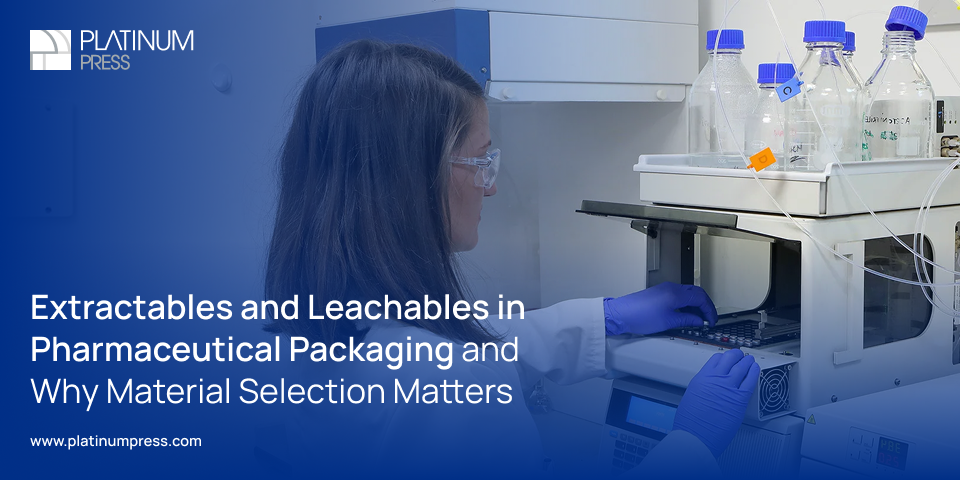
Extractables and Leachables in Pharmaceutical Packaging and Why Material Selection Matters
In pharmaceutical packaging, safety goes far beyond the drug product itself. Materials used in labels, cartons, inks, coatings, laminations, and adhesives may also influence product protection and patient safety. For companies evaluating Pharmaceutical Printing Solutions, material chemistry is becoming as important ass print clarity, durability, and regulatory accuracy.
One key area of focus is extractables and leachables in pharma, commonly referred to as E&L. As regulatory expectations and material-transparency requirements evolve, pharmaceutical companies are examining how packaging components interact with the products they support.
This process includes reviewing e&l testing, supplier documentation, and the potential risk associated with each leachable and extractable substance. At Platinum Press, this broader perspective helps guide material selection across Custom Packaging Solutions and Contract Packaging Solutions.
What Are Extractables and Leachables?
Extractables are chemical compounds that may be released from packaging materials under aggressive laboratory conditions, such as elevated heat, strong solvents, or extended contact. During e&l testing, these conditions help laboratories identify substances that could potentially migrate.
Leachables are compounds that actually migrate from packaging materials into a drug product during normal manufacturing, storage, transportation, or use.
In simple terms, extractables represent potential risk, while leachables represent actual migration. The distinction between a leachable and extractable compound matters because not every substance found during aggressive testing will migrate under normal conditions.
The phrase leaching pharmacy sometimes appears in online searches about chemical migration. Technically, however, leaching pharmacy is not the preferred industry term. The subject generally concerns packaging systems, materials, and potential migration rather than routine pharmacy operations.
Why E&L Matters in Pharmaceutical Packaging?
Pharmaceutical packaging materials may remain close to regulated products throughout manufacturing, storage, transportation, and use. Although cartons and labels are generally considered secondary packaging, their inks, coatings, adhesives, and environmental exposure still require careful consideration.
If chemicals migrate from packaging components into the product, even at low levels, they may raise concerns involving:
- Product stability
- Patient exposure
- Safety and toxicity
- Regulatory compliance
- Product quality over time
This is why extractables and leachables in pharma are evaluated through product-specific scientific and regulatory processes.
The discussion is no longer limited to whether packaging performs mechanically. It also concerns what the packaging is made from, how its materials behave over time, and whether selected Custom Packaging Solutions introduce an avoidable migration risk.
The appropriate level of e&l testing depends on dosage form, contact conditions, storage duration, packaging configuration, and patient risk. A documented extractables and leachables risk assessment helps determine whether laboratory testing, toxicological review, or additional supplier controls are necessary.
The Growing Focus on Safer Material Chemistry
The pharmaceutical industry is placing greater emphasis on reducing or eliminating substances associated with:
- VOCs
- PFAS
- BPA
- Mineral oils
- Certain photoinitiators
- Certain heavy metals
This focus reflects the broader purpose of controlling extractables & leachables. Reducing unnecessary chemicals during material selection may lower potential migration risks before production begins.
Pharmaceutical companies are also strengthening requirements for providers of Pharmaceutical Printing Solutions, Custom and Contract Packaging Solutions. Suppliers may be asked to provide technical data sheets, compliance declarations, composition statements, or supporting documentation.
For Platinum Press, safer material chemistry supports regulatory transparency and responsible packaging production. It also gives customers stronger information when assessing a possible leachable and extractable concern.
Why Ink and Coating Selection Matters?
When people consider pharmaceutical packaging safety, they often focus on the substrate. However, inks, coatings, varnishes, laminations, and adhesives also matter because each material may contain compounds with different migration characteristics.
These components may contribute to extractables and leachables in pharma if they are not properly selected, applied, cured, or controlled. Risk may also change when materials are exposed to heat, moisture, long storage periods, or indirect contact conditions.
At Platinum Press, material selection is approached with these considerations in mind. The company uses FDA-compliant inks for indirect food and drug contact and has expanded its capabilities with ink systems free from VOCs, PFAS, BPA, mineral oils, and other potentially hazardous substances.
This approach strengthens Pharmaceutical Printing Solutions without suggesting that safer printed materials replace formal product-specific studies. Careful material selection instead provides an initial layer of control within a larger extractables and leachables risk assessment.
The goal is to reduce unnecessary chemical exposure while maintaining adhesion, durability, legibility, color performance, and production efficiency across Custom Packaging Solutions.
Regulatory Expectations and FDA Guidance
Regulators expect pharmaceutical manufacturers to understand the materials used in packaging systems and evaluate potential patient exposure where appropriate. Extractables and leachables FDA guidance is commonly considered alongside container-closure requirements, toxicological evaluation, drug-product risk, and accepted industry practices.
Companies reviewing extractables and leachables FDA guidance should work with qualified regulatory, packaging, toxicology, and laboratory specialists. A scientifically justified extractables and leachables risk assessment helps define what testing is necessary and how the results should be interpreted.
Providers of Contract Packaging Solutions should understand these expectations. However, specialized laboratories typically conduct the analytical work required to identify and quantify extractables & leachables.
The Role of Supplier Qualification and Documentation
Managing E&L risk begins before production. Qualified suppliers, controlled specifications, material transparency, and change-management procedures are essential. Platinum Press works with qualified material suppliers and maintains supporting documentation related to inks, coatings, adhesives, and substrates used in pharmaceutical packaging applications.
These records can support customer reviews, regulatory expectations, and material-transparency initiatives. Documentation is particularly important when customers compare Pharmaceutical Printing Solutions or request supporting evidence for Custom Packaging Solutions.
Although specialized laboratories generally complete formal e&l testing, supplier qualification remains an important first layer of risk reduction. The same principle applies to Contract Packaging Solutions, where several materials may contribute to the complete packaging system.
Packaging Safety Is Also Patient Safety
Patients may never consider the chemistry behind a label, carton, or printed insert. Pharmaceutical companies must because packaging components become part of the broader product environment.
Reducing migration risk supports the same objective as every other pharmaceutical quality-control measure: protecting the patient. This is why extractables and leachables in pharma continue to receive greater attention.
The phrase leaching pharmacy may appear when people search for information about chemical migration. However, leaching pharmacy should be understood as an informal search phrase rather than formal scientific terminology. At Platinum Press, patient safety considerations include print accuracy, material selection, supplier controls, documentation, and chemical transparency.
A More Proactive Approach to Pharmaceutical Packaging
Modern pharmaceutical packaging suppliers are expected to provide more than print quality alone. They must also understand material chemistry, regulatory concerns, change control, and long-term packaging safety. A proactive strategy can include safer materials, qualified suppliers, controlled production, transparent documentation, and a review of extractables and leachables FDA guidance.
It should also identify practical controls before a customer begins a formal extractables and leachables risk assessment. For customers using Contract Packaging Solutions, early coordination can help identify which materials and processes require additional scrutiny. At Platinum Press, this broader approach supports Pharmaceutical Printing Solutions that balance compliance, sustainability, performance, and patient safety.
It also helps customers evaluate each leachable and extractable risk and strengthen controls around extractables & leachables. The phrase leaching pharmacy may attract general search interest, but the real priority is scientifically evaluating chemical migration within pharmaceutical packaging systems.
Because in pharmaceutical packaging, what is inside the package is not the only thing that matters. The materials surrounding the product and the controls behind their production also contribute to product integrity and customer confidence.
Frequently Asked Questions
What is the difference between extractables and leachables?
Extractables may migrate under aggressive testing conditions, while leachables actually migrate during normal storage or use. Both support pharmaceutical packaging safety evaluations.
When is E&L testing necessary?
Testing depends on dosage form, contact pathway, packaging materials, storage conditions, and patient risk. Each testing strategy should be scientifically justified.
Does the FDA address extractables and leachables?
Extractables and leachables FDA guidance is considered with container-closure requirements and industry standards. Qualified regulatory and laboratory specialists should guide interpretation.
Can secondary printed packaging create migration concerns?
Yes. Inks, coatings, adhesives, environmental exposure, and indirect contact pathways may require evaluation, even without direct drug-product contact.
How does supplier qualification reduce E&L risk?
Supplier qualification improves material transparency, documentation, consistency, and change control, helping identify potential chemical concerns before components enter regulated production.
Does Platinum Press perform formal E&L studies?
Platinum Press supports safer material selection and documentation, while specialized laboratories generally conduct formal analytical studies and product-specific toxicological evaluations.